





That musty smell hitting you every time the swamp cooler kicks on isn't just annoying, it's a sign of algae, mineral buildup, or both living in your system. If you've searched for a swamp cooler cleaner that actually solves the problem instead of masking it with fragrance, you're in the right place.
The short answer: you need a product that dissolves scale on contact and breaks down the organic gunk causing odor, without corroding your pump, pads, or metal housing. Harsh acid-based descalers might strip mineral deposits, but they can also eat away at cooler components over time. A better evaporative cooler cleaner works on both fronts at once, cleaning the water reservoir and treating the swamp cooler pad cleaner needs separately, since pads and metal parts don't respond the same way to every formula.
In this guide, you'll learn exactly how scale and odor build up in swamp coolers, what separates a genuinely effective swamp cooler cleaning solution from one that just smells good temporarily, and the step-by-step process for cleaning your unit this season. We'll also cover what to look for when comparing the best evaporative cooler cleaner options, so you're not guessing at the hardware store.
What causes odor and scale in a swamp cooler
Every swamp cooler works the same way: water evaporates off a wet pad while a fan pulls air through it, and that evaporation is exactly what leaves your problems behind. Water leaves as vapor, but the minerals dissolved in it don't. They stay behind and concentrate in the reservoir and on the pads every single cycle, which is why coolers in hard water areas scale up faster than most people expect.
Mineral scale buildup
Calcium and magnesium in tap water crystallize as the water evaporates, forming a chalky white crust on the tank floor, float valve, and pump housing. Left alone, this mineral scale buildup clogs the pump intake, throws off the float switch, and reduces airflow through the pads, which forces your cooler to work harder for less cooling.
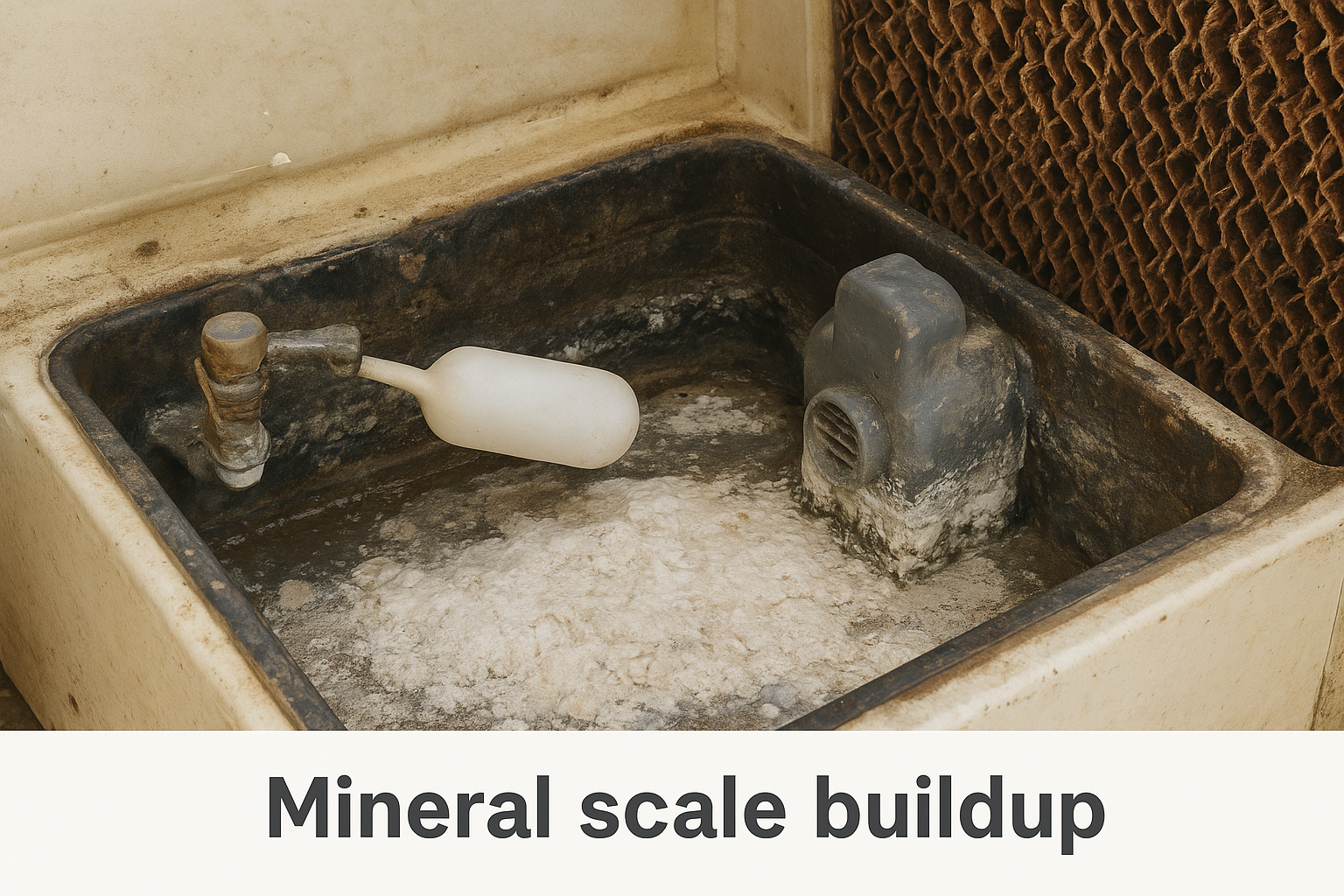
Scale doesn't go away on its own. It only gets thicker until something in the system fails.
Algae and bacterial growth
Standing water plus warmth plus organic dust equals the perfect environment for algae and bacterial growth. Swamp coolers sit dormant for months at a time, and any water left in the reservoir turns stagnant fast, especially in units stored outdoors or on a roof exposed to direct sun.
Saturated cooler pads
Pads are the real odor factory here. Cellulose and aspen pads absorb mineral-laden water thousands of times over a season, and that constant wetting and drying cycle traps organic debris deep in the fibers. Once bacteria colonize a saturated cooler pad, no amount of fan-only operation clears the smell, because the source is baked into the material itself, not just floating in the tank water.
Step 1. Gather the right cleaning supplies
Before you touch a wrench, lay out everything you need so you're not dripping water across the garage floor looking for a scrub brush. A proper swamp cooler cleaning solution works faster when you're prepared, and having the right tools on hand keeps you from reaching for bleach or vinegar out of frustration, both of which can damage pads and metal components over repeated use.
The right supplies turn a two-hour scrubbing chore into a thirty-minute maintenance task.
Here's what to gather:
- Non-corrosive swamp cooler cleaner rated safe for metal cabinets and pump housings
- A swamp cooler pad cleaner or replacement pads if yours are more than two seasons old
- Stiff nylon brush for scrubbing tank walls and float assemblies
- Garden hose with a spray nozzle for flushing
- Wet/dry shop vac or bucket for draining standing water
- Rubber gloves and safety glasses
- Screwdriver for removing side panels
Skip anything acid-based labeled for masonry or automotive descaling. Those products dissolve scale fast but pit aluminum housings and degrade pump seals over time, costing you more than the cleaner saved.
Step 2. Drain and flush the water tank
Cut power to the unit and shut off the water supply line before you open anything. Standing water in a swamp cooler holds most of the loose sediment and bacteria, so getting it out first saves you from scrubbing dissolved gunk back into clean surfaces later.
Shut off power and drain the reservoir
Locate the drain plug or cap at the base of the tank and let gravity pull the water out into a bucket or onto ground away from plants, since concentrated mineral water can stress landscaping. Once it's empty, tilt the unit slightly if needed to catch the last few inches pooled near the pump housing.
A cooler drained completely, not just partially, is the difference between a real clean and a diluted one.
Flush with a hose before adding cleaner
Run your garden hose through the tank on full pressure, aiming at corners and the float valve where sediment collects. This step is where a swamp cooler water cleaner does its best work, since it's hitting bare metal instead of fighting through standing residue. Repeat the flush until runoff looks clear, then move on to the pads and cabinet.
Step 3. Clean the cooler pads and cabinet
With the tank flushed, turn your attention to the two surfaces holding most of the smell: the pads and the cabinet walls behind them. Pull the side panels off with your screwdriver and inspect the pads before you decide whether to clean or replace them, since brittle or crumbling pads won't hold a treatment no matter how good the product is.
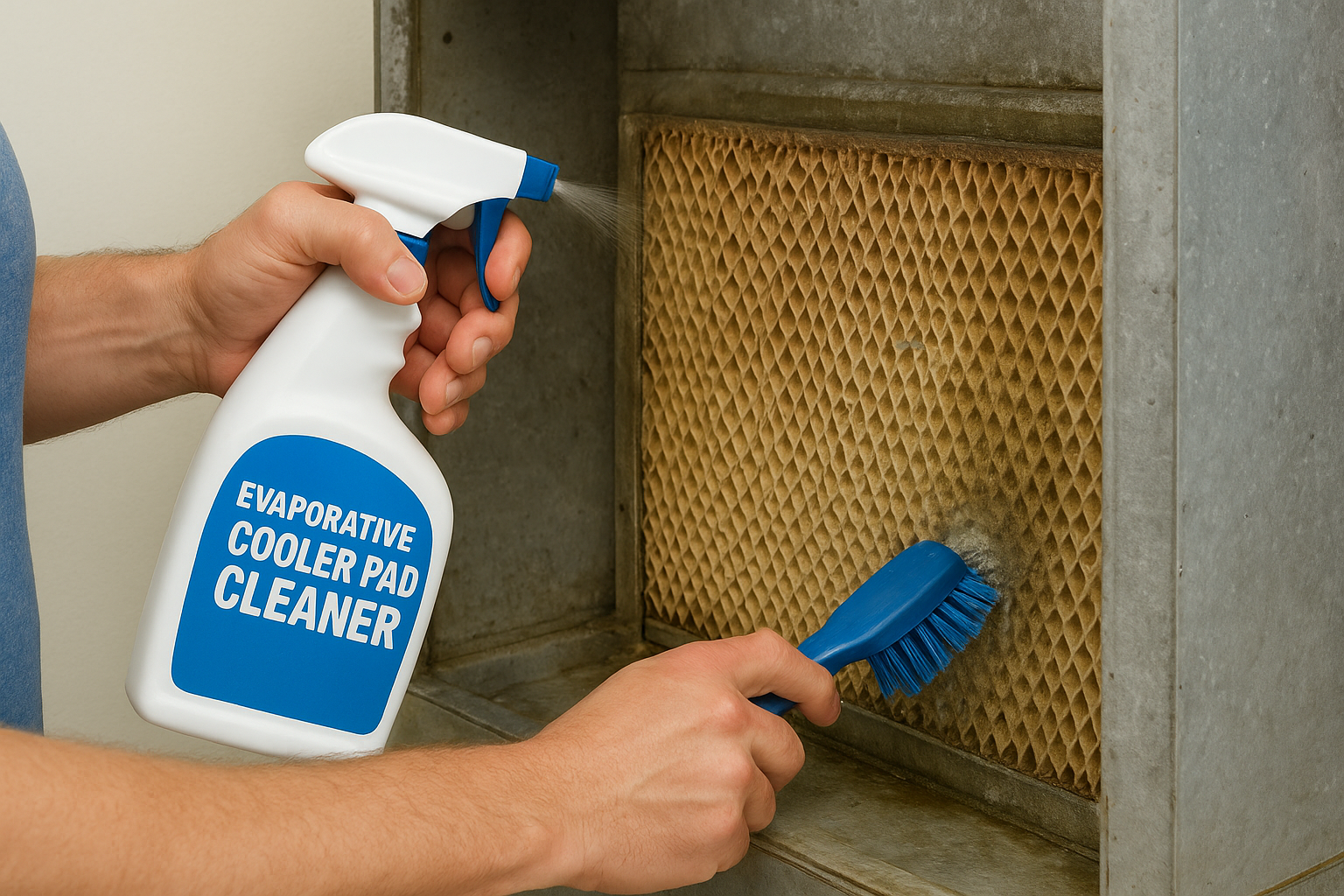
Scrub the cabinet with your cleaner
Spray your evaporative cooler pad cleaner or general cabinet cleaner directly onto the metal walls, focusing on corners where algae film clings after the water level drops. Let it sit for the dwell time listed on the label, usually five to ten minutes, then scrub with your nylon brush and rinse thoroughly. Don't skip the fan blades and motor shroud, since dust and organic film build up there too and feed the odor cycle even after the tank is spotless.
A clean tank with dirty pads still smells like a dirty swamp cooler.
Decide on the pads
- Pads under two seasons old with no crumbling: soak in a diluted pad-safe cleaner, rinse, and reinstall
- Pads that flake, smell sour even when dry, or feel stiff: replace them outright
- Aspen pads specifically: replace yearly regardless of appearance, since they degrade faster than cellulose
Step 4. Treat the water to prevent buildup
Once the tank, pads, and cabinet are clean, refilling with plain tap water just restarts the mineral clock. Adding a swamp cooler water cleaner or scale-inhibiting treatment to the fresh fill keeps calcium and magnesium suspended in the water instead of crystallizing on your pump and float valve, buying you weeks of protection instead of days.
Add treatment at every refill
Pour the treatment in as the tank fills, following the label ratio for your reservoir size, usually a capful per five gallons. Non-toxic formulas work here without leaving residue on pads or requiring gloves, which matters if you're topping off the tank mid-season without draining it fully first.
A treated tank stays clean between cleanings. An untreated one just buys time before the next scrub.
Watch for early warning signs
Check the water weekly during peak season for cloudiness or a filmy surface, both signs the treatment dose was too light for your local water hardness. Bumping the concentration slightly, rather than skipping treatments altogether, keeps scale from restarting the buildup cycle you just cleared out.
Keeping your swamp cooler fresh all season
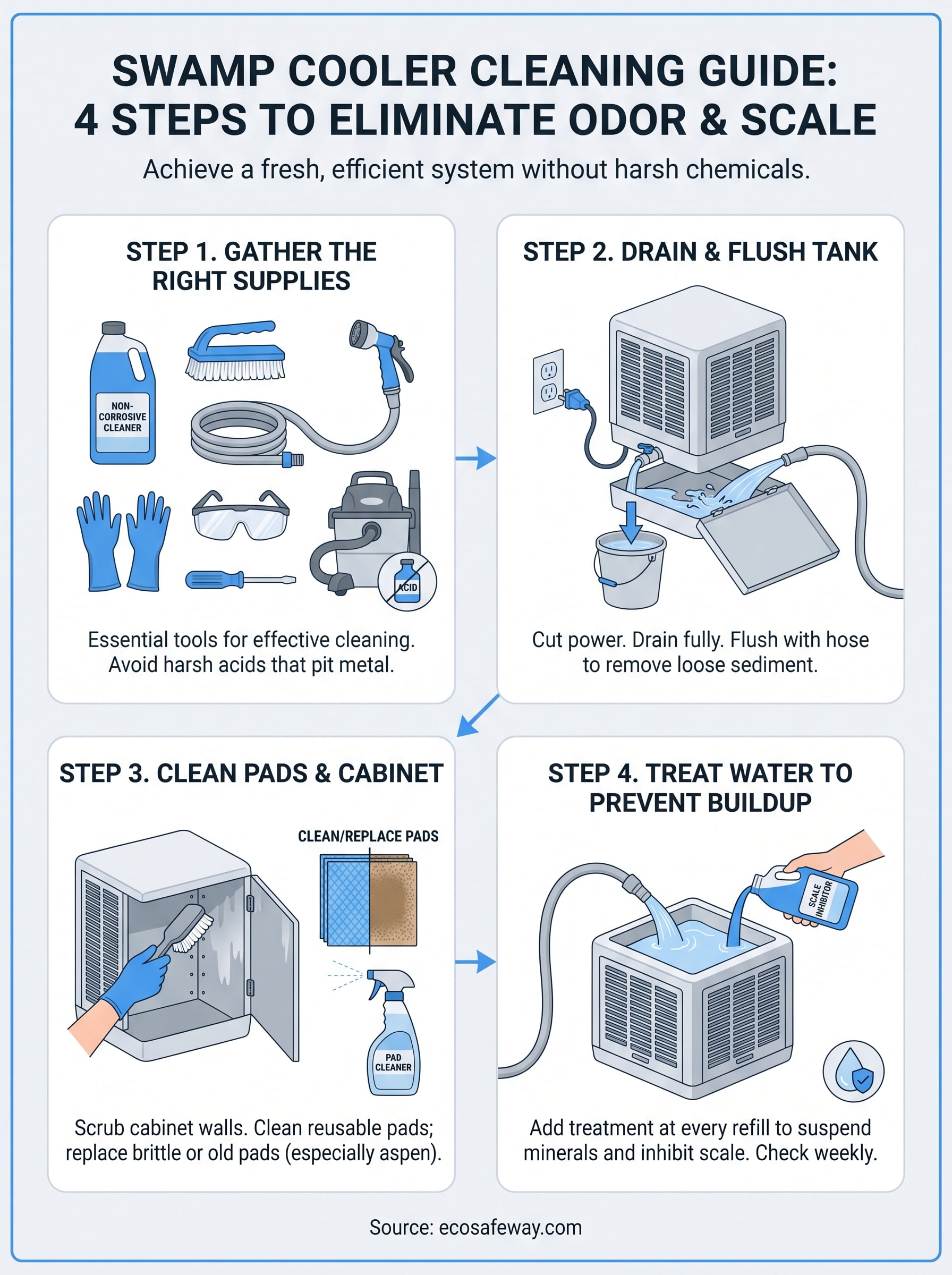
A clean swamp cooler comes down to four habits repeated on schedule: drain the standing water, scrub the pads and cabinet, treat every refill, and watch for early signs of scale creeping back. Skip any one of those steps and you're back to the musty smell within a few weeks, no matter how good the swamp cooler cleaner you started with.
Seasonal maintenance beats emergency scrubbing every time. Set a reminder to check the tank monthly during peak use, and you'll spend minutes on upkeep instead of hours undoing months of neglect.
Mineral scale isn't unique to swamp coolers either. If you're managing cooling towers, condenser coils, or other HVAC equipment fighting the same hard-water buildup, the same non-corrosive, non-toxic approach applies at industrial scale. Check out Eco Safeway's industrial HVAC and cooling tower descaler for a formula built to dissolve scale without damaging equipment, whether you're protecting one unit or an entire facility.


