





The restaurant cleaning chemicals you need fall into seven groups: alkaline degreasers, dish detergents, food-contact sanitizers, disinfectants, floor cleaners, surface and stainless steel cleaners, and equipment and drain cleaners. A good pick matches one job, one surface and one set of label directions. Every kitchen needs the first five. Operators who run an ice machine or deal with smelly floor drains should add the last two. Fryer-heavy lines will lean hardest on degreasers, and any kitchen with prep tables needs a sanitizer and test strips.
The usual mistake is buying by "heavy duty" on the label. A strong degreaser on a dining room floor strips the finish. A sanitizer on a greasy board never reaches the surface. Two products that do the same job pile up in the storeroom while a gap goes unfilled until inspection day.
This article walks through the seven groups in the order most kitchens need them. Each one covers what the chemical does, how to use it, and what to check before you buy. Eco Safeway makes biodegradable janitorial cleaners, and the ones that fit a restaurant appear where they apply. Your product label and local health code always override general advice.
1. Alkaline degreasers
Degreasers are the first chemical to stock because grease is the one soil that ordinary cleaners cannot beat. Buy a concentrate, learn its dilution ratios, and keep it on the cook line side of the building.
What it does
Commercial degreasers are highly alkaline, typically pH 10 to 13. They convert fat into a soap-like film at the surface, which then rinses away. That is why they work on fryer surrounds and hood buildup where a pH 9 retail spray just smears.
Grease that has cycled through heat for weeks hardens into a varnish. Only alkalinity, warm water and dwell time break it down.
How to use it
Dilution depends on the task. These ranges are typical for concentrates, so confirm them against your label:
- Daily cook-line wipe-down: 1:20 to 1:64, sprayed, left 2 to 3 minutes, wiped and rinsed.
- Weekly hood and fryer-surround clean: about 1:5, applied warm and agitated with a nylon brush.
- Floor drains and grease zones: about 1:10 with hot water at close.
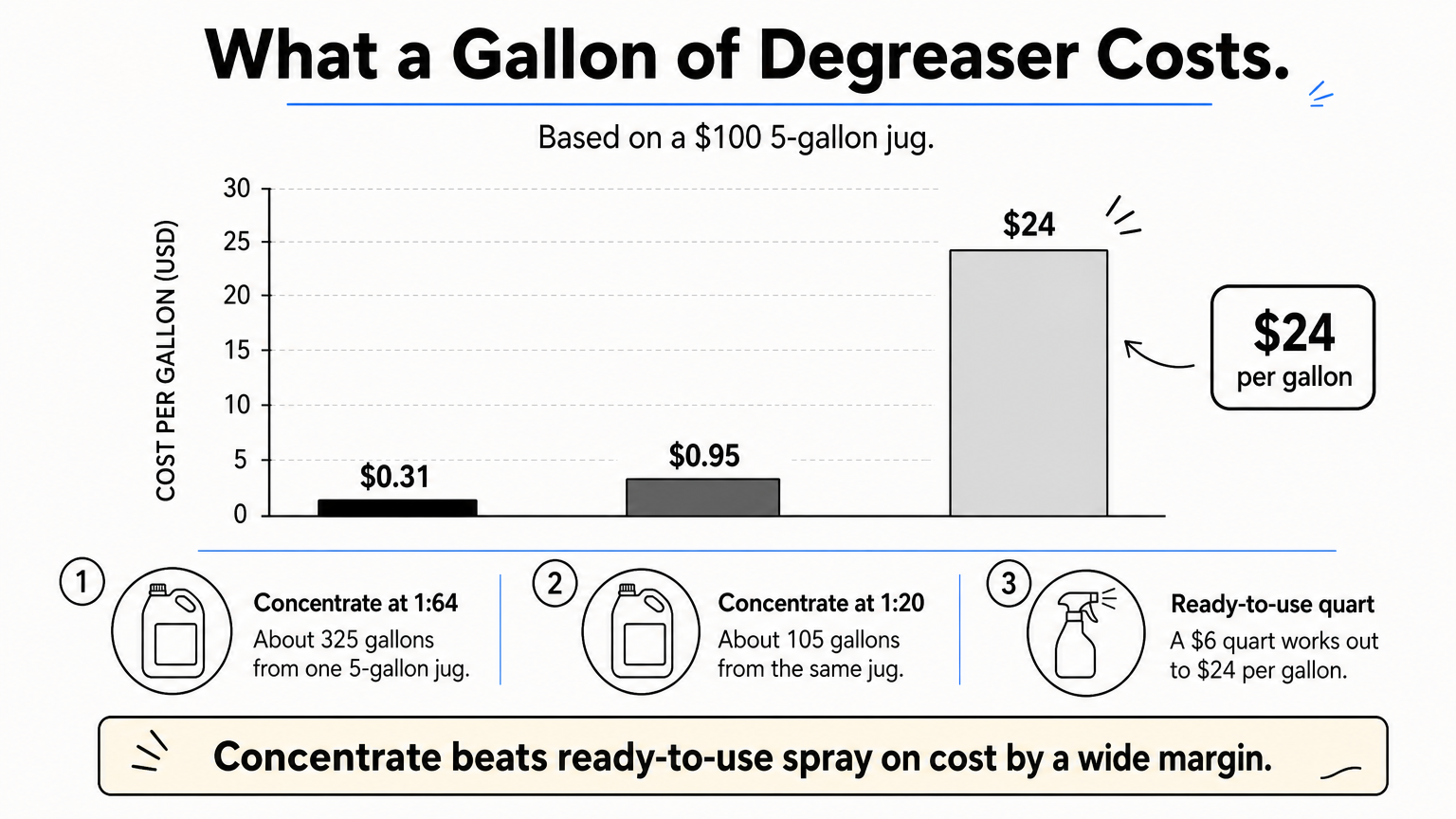
Here is the math. A 5-gallon jug at 1:20 (1 part concentrate to 20 parts water) makes about 105 gallons of working solution. If the jug costs $100, that is roughly $0.95 per gallon. At 1:64 it makes about 325 gallons, or $0.31 per gallon. A $6 ready-to-use quart works out to $24 per gallon.
Concentrate plus correct dilution beats ready-to-use spray on cost by a wide margin.
What to look for
Check the approved surfaces first. High-pH products etch aluminum hood filters and dull stainless if left on overnight, so rinse. Look for a printed dilution chart, a Safety Data Sheet, and a size that matches your weekly use. Free-pouring runs 2 to 4 times over the target ratio, so a wall dispenser or pump pays back quickly.
2. Dish detergents and warewashing chemicals
Dish chemicals are the highest-volume purchase in most kitchens. They are also the most dependent on your equipment, so buy them to match your sink or machine.
What it does
A detergent lifts food soil so water can carry it away. Cleaning has to come before sanitizing, because sanitizer cannot penetrate a food film. A kitchen usually needs manual pot-and-pan detergent for the three-compartment sink, plus machine detergent and rinse aid for the dish machine.
How to use it
For hand washing, the sequence is scrape, wash, rinse, sanitize, then air-dry. Never towel-dry food-contact items.
Machines are dosed by a dispenser rather than by hand. Whether yours is a high-temperature or a chemical-sanitizing model decides which products and settings apply. Follow the equipment manufacturer's instructions, and ask your supplier to calibrate the dispenser.
Match the dish chemical to the machine, not the other way around.
What to look for
- Manual or machine use stated on the label
- Water hardness, since hard water raises detergent demand and scale
- Compatibility with the dispenser and its tubing
- Concentrate or ready-to-use format
- Surface safety for aluminum and soft metals
Do not swap machine detergent into a hand sink unless the label allows it. Machine formulas are often far harsher on skin and on the metals in a sink setup.
3. Food-contact sanitizers
Sanitizers are the chemical inspectors check first. A bucket without test strips is a common write-up.
What it does
A sanitizer reduces specified microorganisms on a surface that is already clean. It does not remove soil. Use it on cutting boards, prep tables, slicers and utensils after washing and rinsing.
How to use it
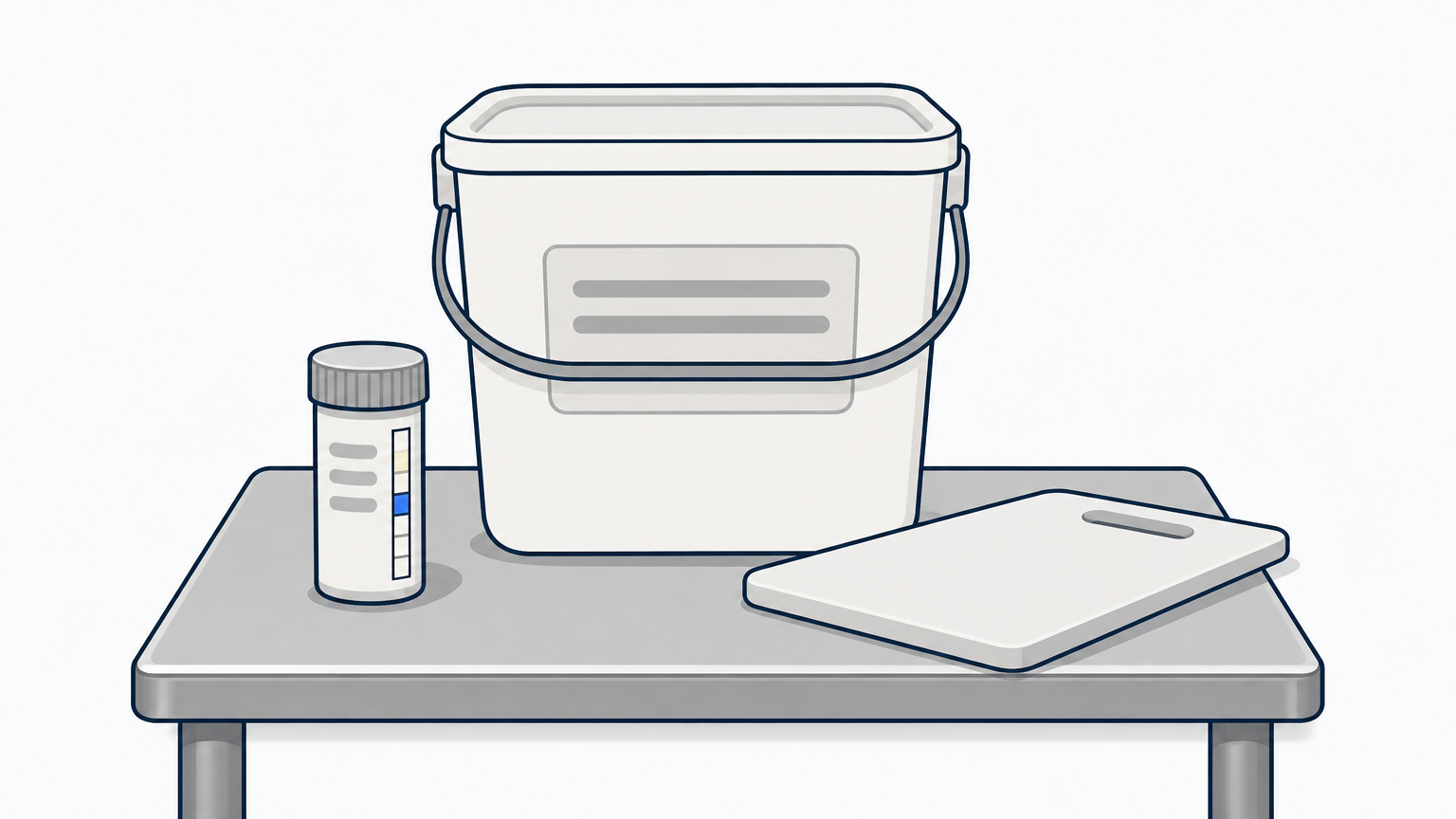
The label sets the concentration and contact time. Verify with test strips every time you make a bucket.
| Sanitizer | Typical working range | Watch for |
|---|---|---|
| Quaternary ammonium (quat) | Often about 200 ppm, per label | Cotton rags absorb it and lower the concentration |
| Chlorine (bleach-based) | About 50 to 100 ppm | Loses strength in hours, corrodes stainless if overdosed |
Change a quat bucket every 2 to 4 hours or when the strip reads low. Overdosing chlorine is a violation as well as a waste. Let sanitized items air-dry so you do not recontaminate them.
Wash, rinse, sanitize, air-dry, in that order, with a test strip in your hand.
What to look for
Confirm the product is EPA-registered and labeled for food-contact sanitizing, and that the strips you buy match the chemistry. Quat strips will not read chlorine. Ask whether a rinse is required at your dilution, since some products are no-rinse and others are not.
4. Disinfectants
Disinfectants have a narrower job than sanitizers. Buy one for restrooms and high-touch points, and keep it away from the prep line.
What it does
A disinfectant inactivates the specific microorganisms listed on its EPA label. It carries different rules than a food-contact sanitizer. Not every disinfectant is approved for surfaces that touch food, and some require a potable-water rinse before use.
How to use it
Clean visible soil first, then apply the disinfectant and keep the surface wet for the full label contact time. Typical targets are restroom fixtures, door handles, POS screens, waste areas and the like.
Three safety habits apply to every chemical in this article:
- Never mix products. Bleach with ammonia or acids can release dangerous gases.
- Label every secondary spray bottle so staff know what is inside.
- Store chemicals away from food, utensils and food-contact equipment, with incompatible products separated.
A disinfectant is not a better sanitizer. It is a different tool with different label rules.
What to look for
Look for the EPA registration number, the organisms claimed, the contact time and the approved surfaces. Pick a contact time your staff can actually honor during a rush. A toilet bowl cleaner removes stains and scale but is a cleaner, not a disinfectant. Eco Safeway's gel toilet bowl cleaner is that kind of product, so pair it with a registered disinfectant where your code requires one.
5. Floor cleaners and tile and grout cleaners
Floors take the most daily chemical use after dishes, and the wrong product causes slips and damaged finishes. Use a neutral cleaner every day and keep degreaser for grease zones.
What it does
A neutral pH cleaner (about 6 to 8) lifts everyday soil without attacking floor finish, sealer or grout. A degreaser is alkaline and needs a rinse step, which a mop bucket routine rarely includes. Residue then builds into a tacky film that turns slick when wet.
How to use it
| Floor type | Daily | Weekly |
|---|---|---|
| VCT | Neutral cleaner by mop or auto scrubber | Degreaser on grease zones, then a neutral rinse pass |
| Sealed concrete | Neutral cleaner | Avoid repeated high-pH products, which etch the sealer |
| Quarry tile and grout | Neutral cleaner | Moderate degreaser with a stiff brush, rinse twice |
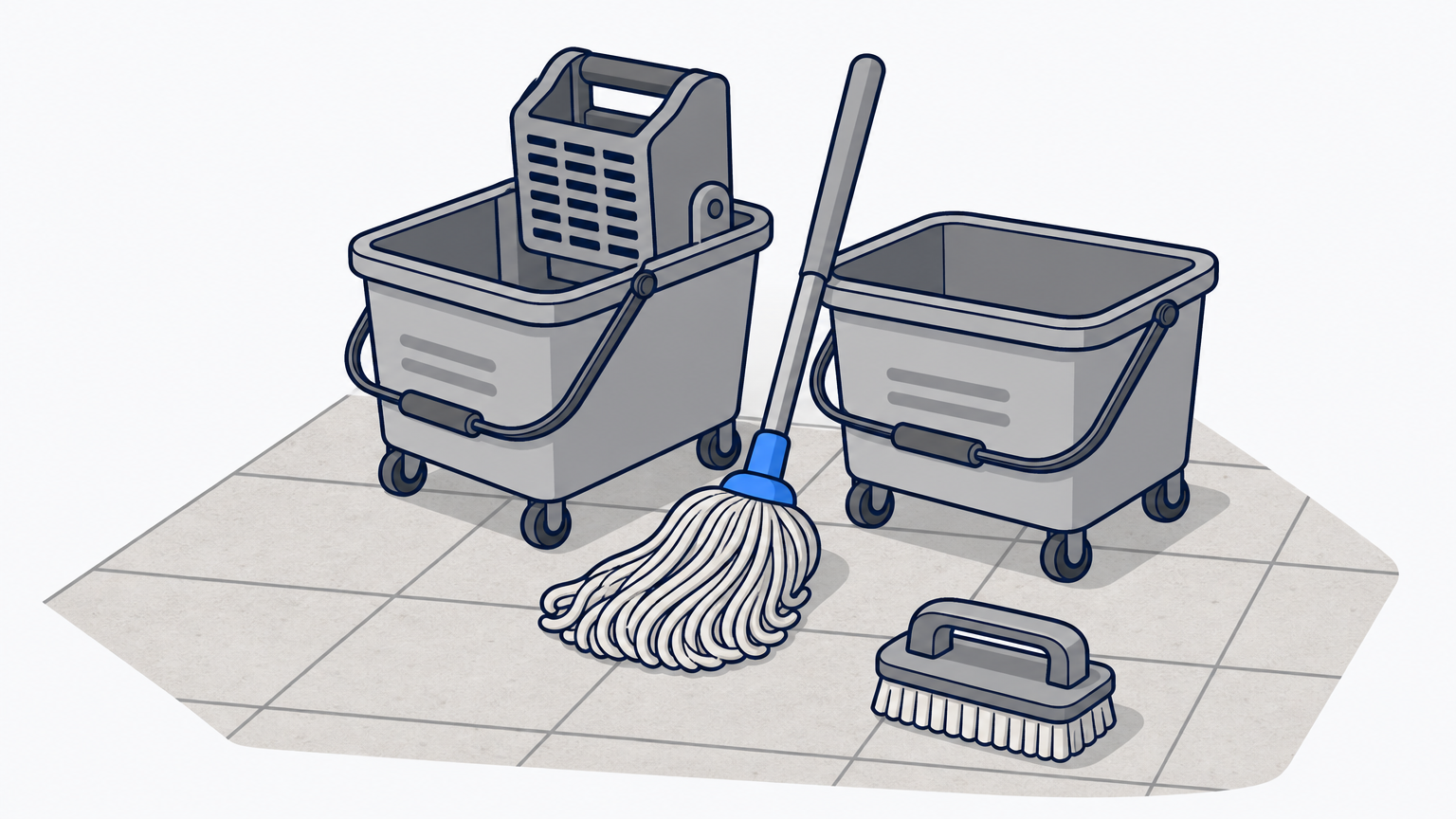
Use separate, labeled buckets for the kitchen degreaser and the dining room neutral cleaner.
Neutral every day, degreaser once a week, and never swap the buckets.
What to look for
Eco Safeway's Hard Floor Cleaner is designed for mop and bucket or floor machines on non-porous hard floors. It is bleach-free, non-toxic and biodegradable. The Tile and Grout Cleaner is a non-acid formula for ceramic, porcelain and quarry tile. Check any floor product for your floor type, rinse needs and machine compatibility. Sizes run from spray bottles to drums.
6. All-purpose and stainless steel cleaners
These handle everything that is not grease-heavy or food-contact sanitizing: counters, walls, equipment exteriors and the stainless that fills a commercial kitchen.
What it does
An all-purpose cleaner covers light daily soil on laminate, tile, painted walls and stainless exteriors. A stainless steel cleaner removes fingerprints, carbon and light grease and leaves a streak-free finish. Together they replace several single-purpose sprays and cut the clutter in your chemical closet.
How to use it
Wipe stainless with the grain, using a clean microfiber cloth. Test any new product on a hidden spot first. For the all-purpose cleaner, follow the label ratio. Eco Safeway's ammonia-free concentrate is listed for dilution from 1:4 to 1:10 in spray bottles or mop buckets, and the stainless steel cleaner is free of petroleum and silicone oils.
Treat these as cleaners only. On a food-contact surface, finish with the wash, rinse and sanitize steps your code requires, following the product label.
One good all-purpose cleaner plus a stainless cleaner replaces half the sprays in most storerooms.
What to look for
- Ammonia-free, if staff also use bleach products nearby
- A stated dilution range and compatible surfaces
- Residue behavior on stainless and laminate
- Concentrate sizes for the volume you use
7. Ice machine cleaner and drain maintenance products
This last group covers the equipment and plumbing that cleaners forget. It matters more than its size suggests, because scale and slime in an ice machine end up in a guest's glass.
What it does
An ice machine cleaner removes calcium, limescale and organic buildup from the water path. A drain maintenance product controls the organic residue, grease and food particles behind floor-drain odors. Eco Safeway's nickel-safe ice machine cleaner is a non-corrosive option for compatible nickel-plated evaporators and carries an HMIS 0-0-0 rating. Its Drain Fresh Deodorizer is meant for routine odor control in restaurants and other food-service drains.
How to use it
Follow your ice machine manufacturer's cleaning procedure, including the separate sanitizing step it requires. Schedule it by the manufacturer's interval and water hardness. Never scoop ice out of a machine mid-clean.
Use drain products on a regular maintenance routine. They do not replace pumping or cleaning a grease trap or interceptor. They help manage the odor between service visits.
Ice machines and drains are food-safety equipment, so give them a calendar entry.
What to look for
Check the manufacturer's compatibility notes for the ice machine, whether the cleaner is nickel-safe, and a Safety Data Sheet. For drains, look for an ingredient list and a stated purpose of odor control, not an overstated promise of clearing blockages.
Stock by job, not by label
Seven groups cover a restaurant: a degreaser for grease, detergents for dishes, a sanitizer with test strips for food-contact surfaces, a disinfectant for restrooms, a neutral floor cleaner, an all-purpose and stainless cleaner, and equipment cleaners for ice and drains. Buy concentrates where you can, keep products in labeled containers, and never mix them. Check every label and your local health code before you set routines.
If your kitchen makes its own ice, start with the equipment most often overlooked. Eco Safeway's nickel-safe ice machine cleaner and descaler comes in sizes from a quart to a drum, and its Safety Data Sheet is available on the product page.


