



If you own a Manitowoc ice machine, you have probably seen two part numbers when shopping for cleaner, and you want to be sure you pick the right one. The wrong choice can mean a wasted order, or worse, a cleaner that attacks the plating on your evaporator. A Manitowoc nickel safe ice machine cleaner is made for machines with nickel-plated evaporators, so the first job is confirming what your machine has.
Here is the short answer. Manitowoc sells its cleaner under part numbers such as 000000084 and 9405803, and the right one depends on your model and the evaporator type. Check your model's service manual or the manufacturer's label before you order. Do not assume one product fits every machine, and do not use a cleaner that is not listed for your unit.
This article explains what each part number is, how to match it to your evaporator, and where to buy it. You will also get a plain overview of how the cleaning process works. Eco Safeway supplies nickel-safe ice machine cleaning products for commercial foodservice, so we focus on verified specifications, not guesswork.
Why the right Manitowoc cleaner matters for your evaporator
The plating is what the cleaner has to respect
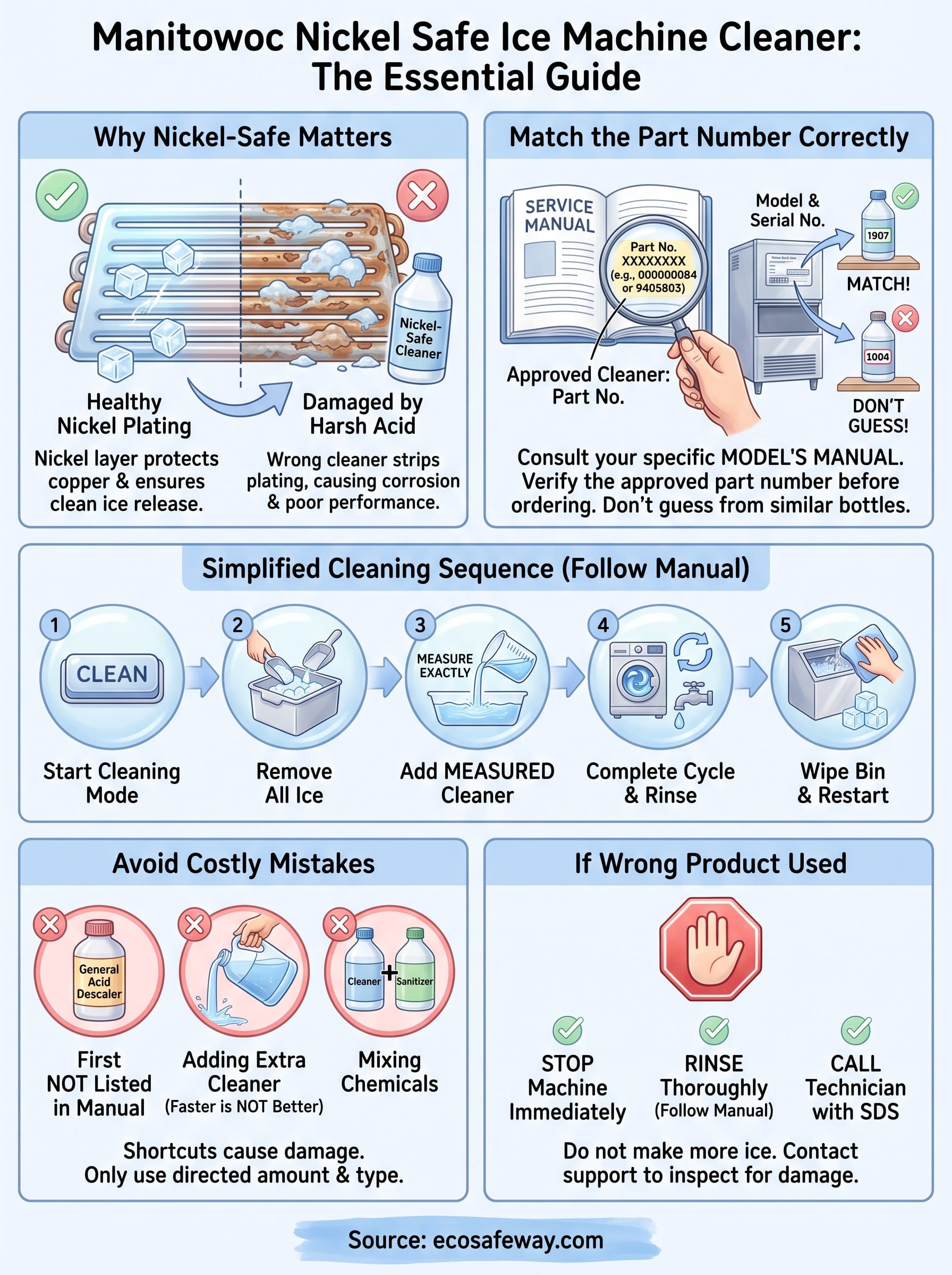
Your evaporator is where water freezes into ice, so it takes the full chemical load of every cleaning cycle. On many commercial machines it is copper with a nickel plating on top. That nickel layer protects the copper and helps keep the freezing surface smooth so ice releases cleanly.
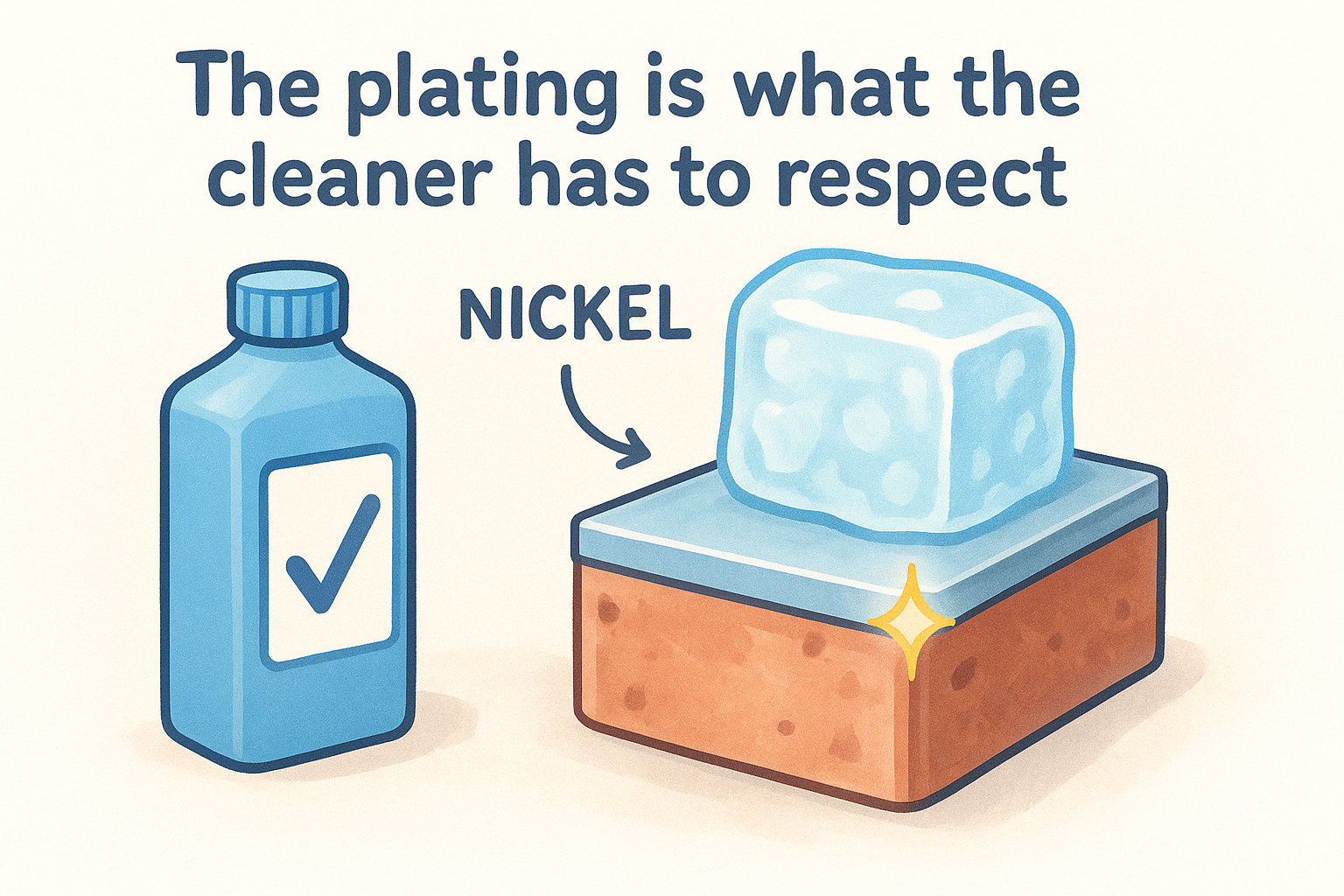
Harsh acid cleaners can strip or pit that plating. Once it is damaged, the evaporator can corrode and lose ice-release performance, and replacing it costs far more than a bottle of cleaner. A nickel-safe formula exists to remove scale without that damage.
Use only the cleaner your Manitowoc manual lists for your evaporator, because plating that has been eaten away cannot be restored.
What skipping cleaning costs you
Scale is the other half of the problem. Minerals in your water build up on the evaporator and act as an insulator, so the machine works harder to freeze every batch. Cleaning on the schedule in your manual, commonly every six months, keeps that buildup in check. Watch for these warning signs:
- Smaller, cloudy, or oddly shaped ice
- Longer freeze and harvest cycles
- Lower daily ice output
- Off taste or odor in the bin
If you see them, cleaning is overdue, but the product you pick still has to match your machine.
How to match the cleaner part number to your machine
Start with the nameplate
Find the model and serial number on the data plate, usually inside the cabinet or on the back panel. Then open the manual for that exact model. Its cleaning section names the approved cleaner and the evaporator type, which is the answer you need.
Verify before you order
Follow this short checklist before you pay for anything, and keep the manual open while you do it:
- Copy the full model number, not just the series.
- Find the cleaner part number in the manual.
- Compare it with the listing, such as 000000084 or 9405803.
- Confirm the listing says nickel-safe if your manual calls for it.
If the part number in the listing does not match your manual, do not order it.
Part numbers get superseded, so a listing and a manual can disagree. When they do, ask the seller or Manitowoc support to confirm the current replacement. Never guess from a similar-looking bottle, because a label on a shelf is not proof that the cleaner suits your evaporator.
How to use nickel-safe cleaner on a Manitowoc ice machine
The general sequence
Every model has its own procedure, so follow the cleaning steps in your manual for the exact dilution and cycle. Using a Manitowoc nickel safe ice machine cleaner usually runs like this:
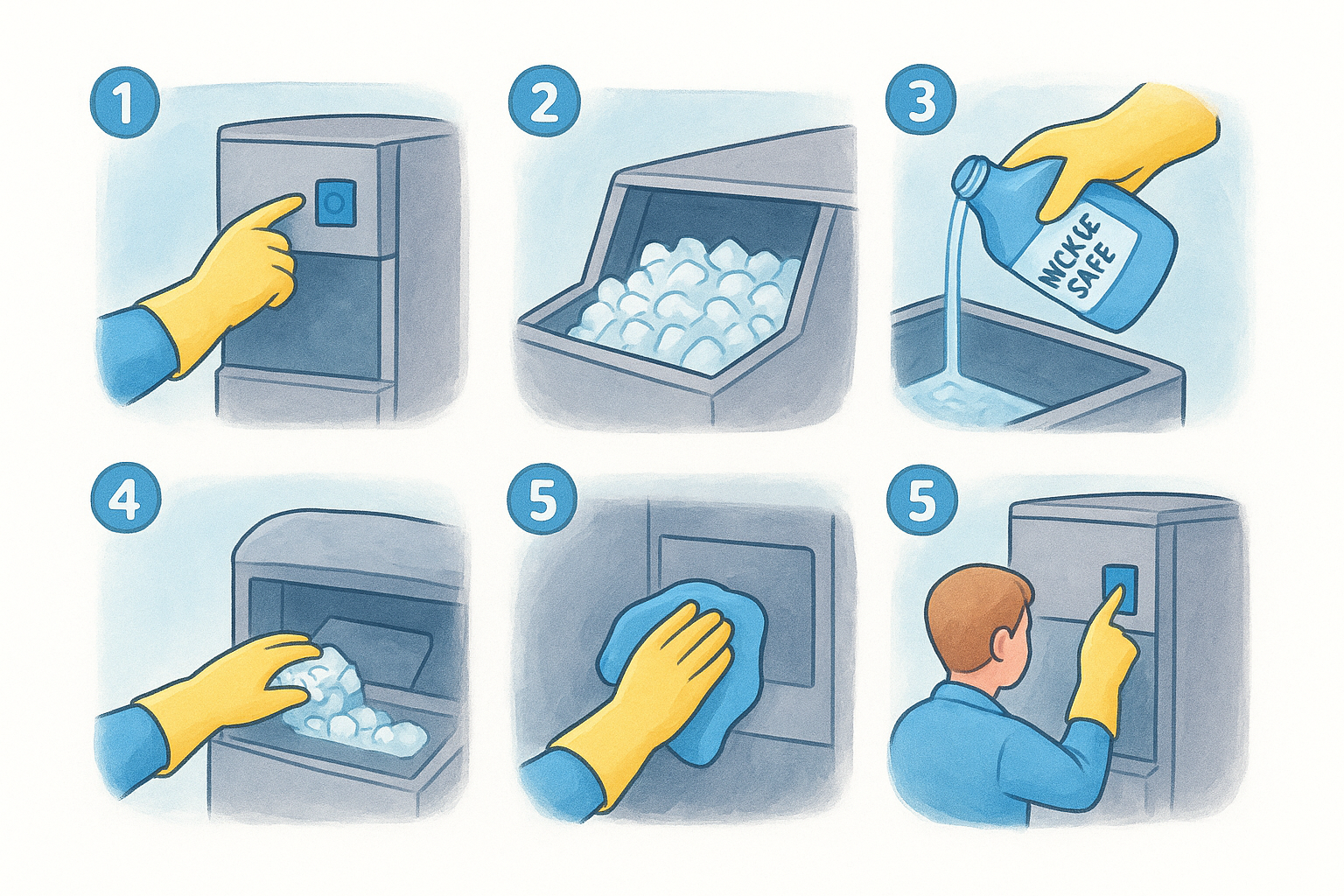
- Start the cleaning mode your manual describes.
- Remove all ice from the bin so none ends up in food.
- Add the measured amount of cleaner to the water trough as directed.
- Let the cycle finish, then rinse as instructed.
- Wipe the bin and restart ice production.
Measure the cleaner exactly as your manual says, because more product does not mean a cleaner machine.
Safety and rinsing
Wear gloves and eye protection, and read the safety data sheet before you open the bottle. A nickel-safe label does not make it a drinking product.
After the cycle, check whether your manual calls for a separate sanitizing step and whether to discard the first batch of ice. Skipping the rinse leaves residue, so do not rush it.
Where to buy and what to check before ordering
Choose a seller you can verify
When you shop for a Manitowoc nickel safe ice machine cleaner, buy from an authorized distributor or a foodservice supply house that shows the part number in the listing. Vague marketplace listings are where mismatched or repackaged bottles turn up.
Ask whether the bottle is new, sealed, and within its date. Old stock may also predate a part number change, so confirm the current number with the seller.
Check the listing before you pay
Before you click order, compare the listing against your manual:
- The part number matches exactly, whether that is 000000084 or 9405803.
- The label says nickel-safe if your manual calls for it.
- The quantity covers your cleaning schedule.
- A safety data sheet is available.
- The return policy covers a wrong-part order.
A listing that cannot show its part number and safety data sheet is not worth the risk.
Finally, keep the receipt and the safety data sheet with your service records. If a question ever comes up about your machine, you can show exactly which cleaner you used.
Common mistakes and what to do if you used the wrong cleaner
Mistakes that cause the most damage
Most problems come from shortcuts, not faulty machines. A Manitowoc nickel safe ice machine cleaner only protects the plating when you use it exactly as directed. Watch for these errors:
- Using a general-purpose acid descaler your manual does not list
- Adding extra cleaner to speed up scale removal
- Mixing cleaner with sanitizer or another chemical
- Skipping the rinse or the first-batch discard
If you already used the wrong product
Stop right away. Do not run another ice batch, and throw out any ice made since the cleaning. Then rinse the machine following the rinse steps in your manual.
If you suspect the wrong cleaner went through your machine, stop and call a technician before making more ice.
Next, contact Manitowoc support or a certified technician with the product name, the date, and your model number. They can inspect the evaporator for pitting or discoloration. Keep the receipt and safety data sheet ready, because they tell the technician exactly what touched the plating.
Picking the right cleaner with confidence
The right Manitowoc nickel safe ice machine cleaner comes down to one habit: match the part number to your manual, not to a bottle that looks familiar. Confirm your model, check whether 000000084 or 9405803 is listed for your evaporator, and follow the cleaning steps exactly. That protects the nickel plating and keeps ice output steady between cleanings.
Before you buy, verify the seller and the safety data sheet, and keep both with your service records. If something goes wrong, stop the machine and call a technician instead of running more ice.
Should you want a nickel-safe option for a commercial foodservice setting, look at Eco Safeway's nickel-safe ice machine cleaner. Then compare its specifications with what your machine's manufacturer requires before you order.


