




A single large cruise vessel can carry over 6,000 passengers, serve 30,000 meals a day, and burn through thousands of cleaning products per voyage. Behind every smooth sailing experience is a cruise ship procurement operation responsible for sourcing everything from engine room chemicals to linens, food, and fuel, often across multiple countries and regulatory frameworks. It's a supply chain with enormous scale and strict requirements.
For suppliers, breaking into this market means understanding how cruise lines evaluate vendors, especially around safety, environmental compliance, and product performance. At Eco Safeway, we manufacture HMIS 0-0-0 rated, non-toxic cleaning solutions used across marine and commercial operations, so we see firsthand how procurement teams weigh these factors when selecting products that meet both operational standards and environmental regulations.
Whether you're exploring procurement careers, looking to sell products or services to cruise lines, or simply curious about how these floating cities stay stocked, this article breaks down the process. We'll cover how cruise ship procurement works, who's involved, what suppliers need to qualify, and where the industry is heading with sustainability and sourcing trends.
Why cruise ship procurement is different
Cruise ship procurement operates at a scale and complexity that has no real equivalent on land. A single ship might need 20,000+ individual SKUs managed across food, beverage, fuel, cleaning supplies, spare parts, and guest amenities. Unlike a hotel or hospital that orders from a fixed location, cruise lines take delivery in rotating ports across multiple countries, which means every supplier must adapt to different customs rules, tax regulations, and import requirements depending on where the ship docks.
Regulatory and environmental pressure
Procurement teams in this sector must navigate international maritime law as well as the environmental policies of every port their vessels visit. Regulators like the International Maritime Organization (IMO) set strict limits on what chemicals and materials ships can use or dispose of at sea. This pressure pushes buyers to prioritize non-toxic, biodegradable, and compliant products over cheaper alternatives, especially for cleaning chemicals, hull treatments, and wastewater management.
Cruise lines can face substantial fines and port bans if their onboard products don't meet the environmental standards of the regions they sail through.
Suppliers who can demonstrate clear safety certifications and environmental compliance documentation move to the top of vendor shortlists. This is why ratings like HMIS 0-0-0 carry real weight in cruise ship procurement decisions, and why understanding these requirements before you approach a cruise line gives you a meaningful advantage over competitors who can't back up their claims.
Logistics at sea
Delivery timing in this industry leaves no margin for error. Ships run on fixed itineraries, and any supply gap directly affects passenger experience and operations. Your deliveries must hit tight port windows, often coordinating across multiple continents to ensure everything arrives before the ship casts off. To stay competitive, cruise line suppliers typically need:
- Real-time inventory tracking synced to ship schedules
- Bonded warehouse access near major cruise ports
- Flexible lead times that account for customs clearance delays at international stops
How cruise ship procurement works end to end
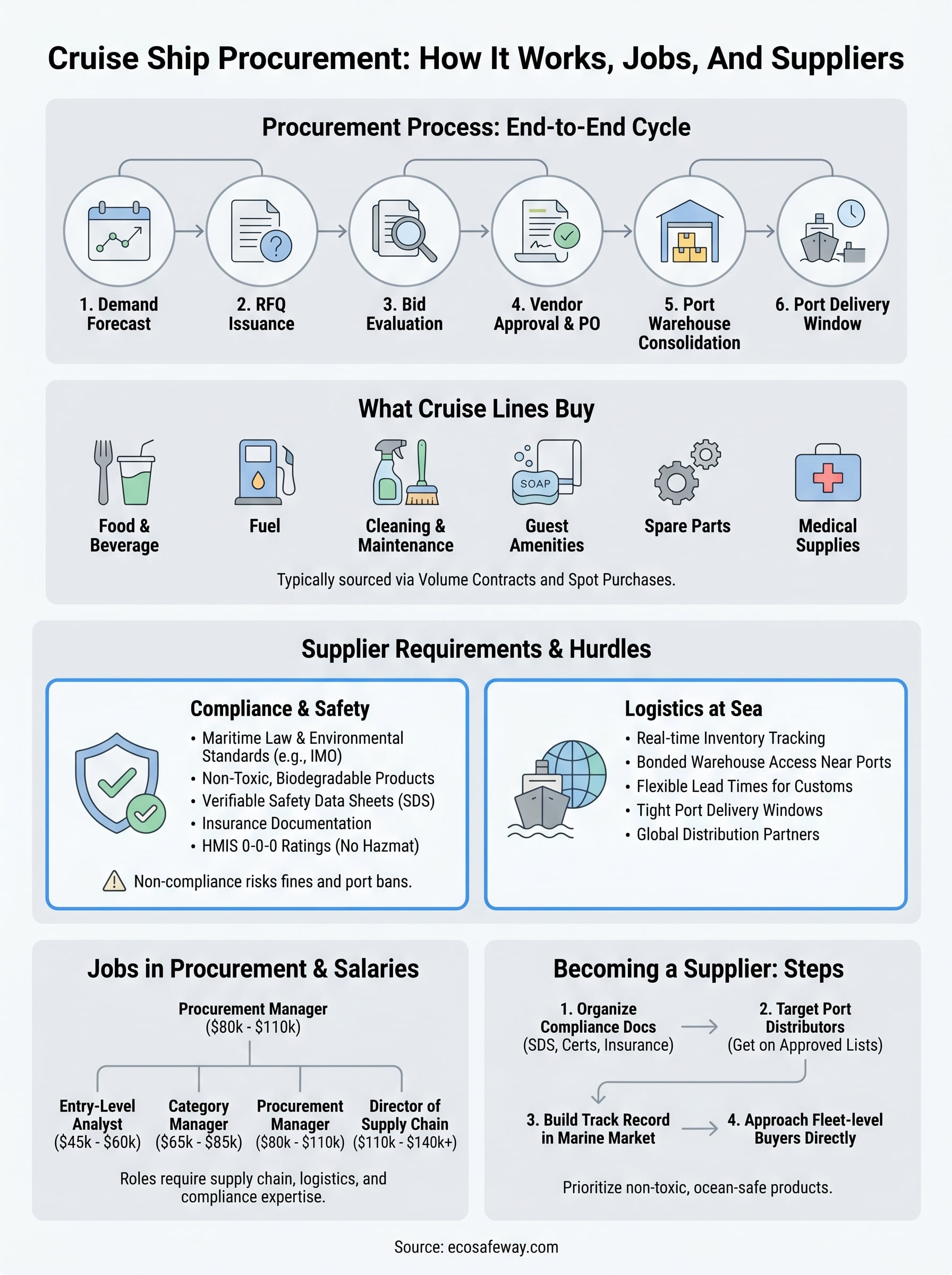
The process follows a structured cycle that repeats continuously as ships move through their itineraries. Procurement managers start by forecasting demand based on voyage schedules, passenger counts, and historical consumption data. From there, they issue requests for quotation (RFQs) to approved vendors, evaluate bids against price, compliance documentation, and delivery reliability, then place purchase orders timed to meet port delivery windows.
From vendor approval to delivery
Before a supplier enters the cruise ship procurement cycle, they must pass a vendor qualification process. This typically involves submitting safety data sheets, certifications, and insurance documentation for review by the ship's supply chain team. Once approved, orders flow through a centralized purchasing system that tracks each item from order placement to port receipt.

Most major cruise lines use enterprise resource planning (ERP) systems to coordinate procurement across their entire fleet simultaneously.
Your products arrive at port agent warehouses, where goods are consolidated and loaded during the ship's turnaround window, sometimes in as little as eight hours. Suppliers who miss that window risk losing the entire order opportunity until the next scheduled port call, which could be weeks away.
What cruise lines buy and how they source it
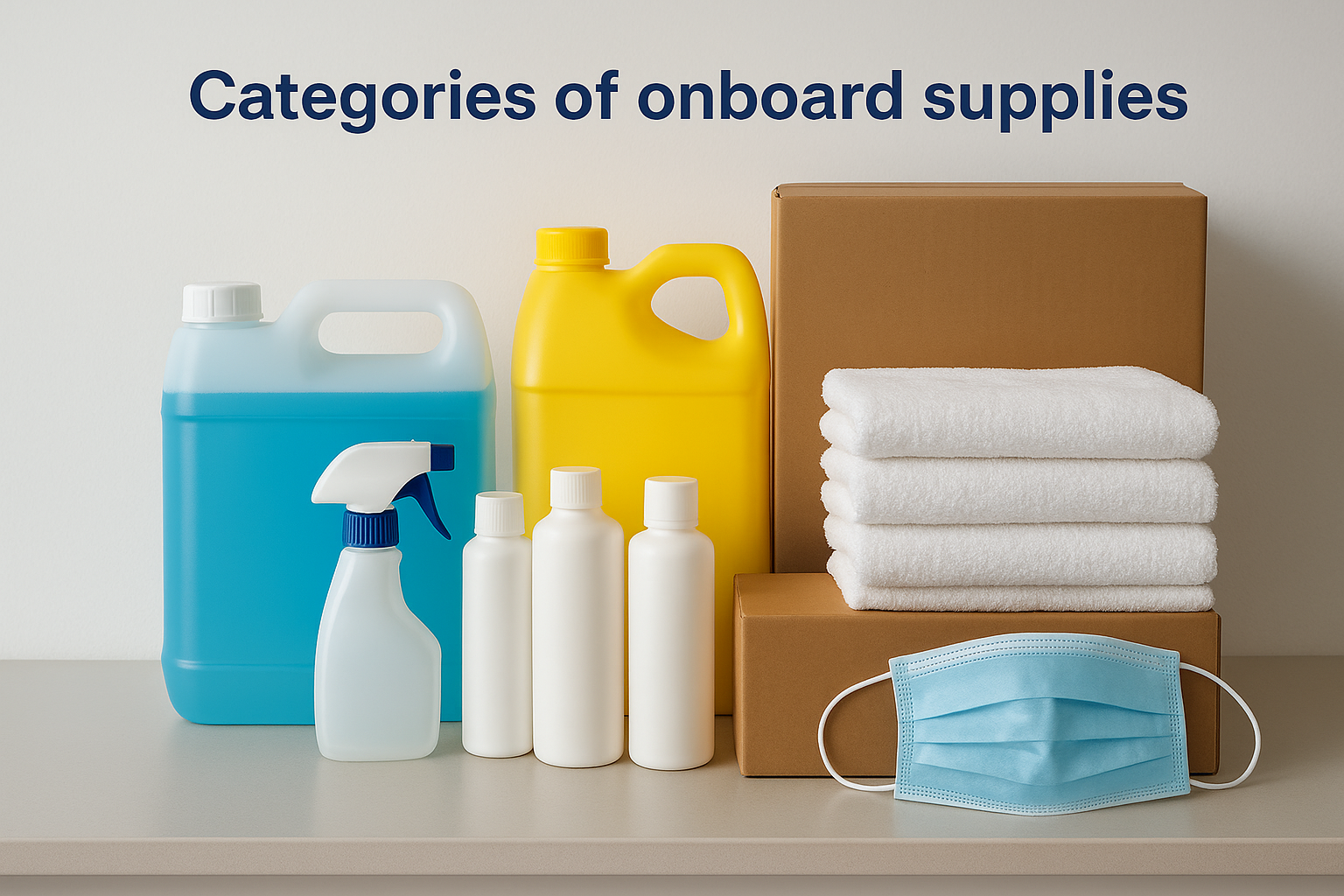
Cruise lines purchase across six broad categories: food and beverage, fuel, cleaning and maintenance chemicals, guest amenities, spare parts, and medical supplies. Volume contracts cover predictable staples like cleaning products, while spot purchases handle specialty or seasonal items that vary by itinerary.
Categories of onboard supplies
The cleaning and maintenance category is particularly complex and compliance-driven. Ships need products that are non-toxic, biodegradable, and approved for use in international waters, which eliminates many conventional industrial chemicals from consideration. Buyers prioritize certified, non-hazardous formulations that don't require special handling or hazmat shipping documentation, since onboard storage space and crew safety protocols create real constraints around what products the ship can carry.
How sourcing decisions get made
Cruise ship procurement teams typically source through global distribution partners who maintain inventory near major ports. This reduces the complexity of coordinating direct supplier deliveries across dozens of ports annually. For niche product categories like eco-friendly marine cleaners, smaller suppliers can earn a position by working directly with a distributor who already holds an active cruise line contract.
Getting into a distributor's approved product catalog is often faster than pursuing a direct cruise line vendor relationship when you're starting out.
Jobs in cruise ship procurement and salaries
Careers in cruise ship procurement sit at the intersection of supply chain management, international logistics, and regulatory compliance. Most positions require hands-on experience in commercial purchasing, vendor negotiations, or maritime operations. Entry-level analysts typically earn $45,000 to $60,000 annually, while senior procurement managers at major cruise lines can reach $90,000 to $120,000 or more, depending on fleet size and the scope of their category responsibilities. The role demands strong attention to detail because a single sourcing error can disrupt an entire voyage schedule.
Common roles and what they pay
Your path into cruise line procurement usually starts in vendor coordination or purchasing analyst roles, where you'll manage RFQs, track orders, and learn compliance requirements across different product categories. From there, you can advance into category manager positions overseeing specific supply areas, or move into fleet-level supply chain director roles that coordinate purchasing decisions across multiple vessels simultaneously. Strong candidates typically hold degrees in supply chain management or business logistics, and certifications like CPSM (Certified Professional in Supply Management) can accelerate career progression significantly.
Procurement professionals with backgrounds in maritime law, international customs, or environmental compliance consistently command higher salaries than generalist buyers in this sector.
| Role | Typical Salary Range |
|---|---|
| Procurement Analyst | $45,000 - $60,000 |
| Category Manager | $65,000 - $85,000 |
| Procurement Manager | $80,000 - $110,000 |
| Director of Supply Chain | $110,000 - $140,000+ |
How to become a cruise line supplier
Breaking into cruise ship procurement as a supplier starts with getting your documentation in order before you approach any buyer. Cruise lines receive hundreds of vendor inquiries, and procurement teams quickly disqualify any company that can't immediately produce safety data sheets, environmental certifications, and liability insurance documentation.
Get your compliance documentation ready
Your first priority is proving that your products meet maritime environmental standards and carry verifiable safety ratings. For cleaning and maintenance products, certifications like HMIS 0-0-0 demonstrate immediately that your formulations are non-toxic, non-hazardous, and safe for international waters, which removes a major objection from the buyer's side before the conversation even starts.
Buyers move faster when your compliance documents are complete and clearly organized, so treat your vendor application packet as a selling document, not a formality.
Approach distributors before going direct
Rather than pursuing a cruise line contract directly, target established port distributors who already supply ships in your product category. Getting onto a distributor's approved product list gives you access to their existing cruise line relationships without requiring you to manage the complex port logistics on your own. Once your product proves reliable through a distributor, direct supplier conversations become much easier to initiate.
Next steps
Cruise ship procurement is a structured, high-stakes process that rewards suppliers and professionals who prepare before they engage. If you're pursuing a vendor relationship with a cruise line, start by organizing your compliance documentation, targeting port distributors, and building a track record in adjacent marine markets before approaching fleet-level buyers directly. If you're building a career in this field, focus on maritime logistics experience and pursue recognized supply chain certifications to separate yourself from generalist candidates.
For suppliers in the marine maintenance and cleaning category, the bar for entry is clear: your products need verifiable safety ratings, biodegradable formulations, and zero hazmat handling requirements. Eco Safeway products meet those standards across the board, making them a practical fit for cruise line procurement teams evaluating cleaning and maintenance solutions. If you operate in the marine sector and need a non-toxic, ocean-safe cleaning solution that passes compliance review without friction, explore our raw water flush for boat engines as a starting point.


