




Chemical drain openers get the job done, until they eat through your pipes, poison the waterway downstream, or send you reaching for gloves and a respirator. A biodegradable enzyme drain cleaner takes a fundamentally different approach: instead of dissolving clogs with caustic acids or lye, it uses naturally occurring enzymes and bacteria to break down organic buildup like grease, hair, soap scum, and food waste.
But how well do they actually work, and where do they fall short? That's the practical question most buyers are really asking. Enzymatic cleaners aren't a universal fix, and understanding their strengths and limitations upfront saves you both money and frustration. At Eco Safeway, we formulate non-toxic, HMIS 0-0-0 rated cleaning products, including enzyme-based solutions, for commercial, industrial, and residential use. Our focus has always been on real performance without hazardous chemicals, so we know where these products shine and where expectations need adjusting.
This article breaks down how enzyme drain cleaners work, what they can and can't do, and how to get the best results when you use them.
Why enzyme drain cleaners beat harsh chemicals
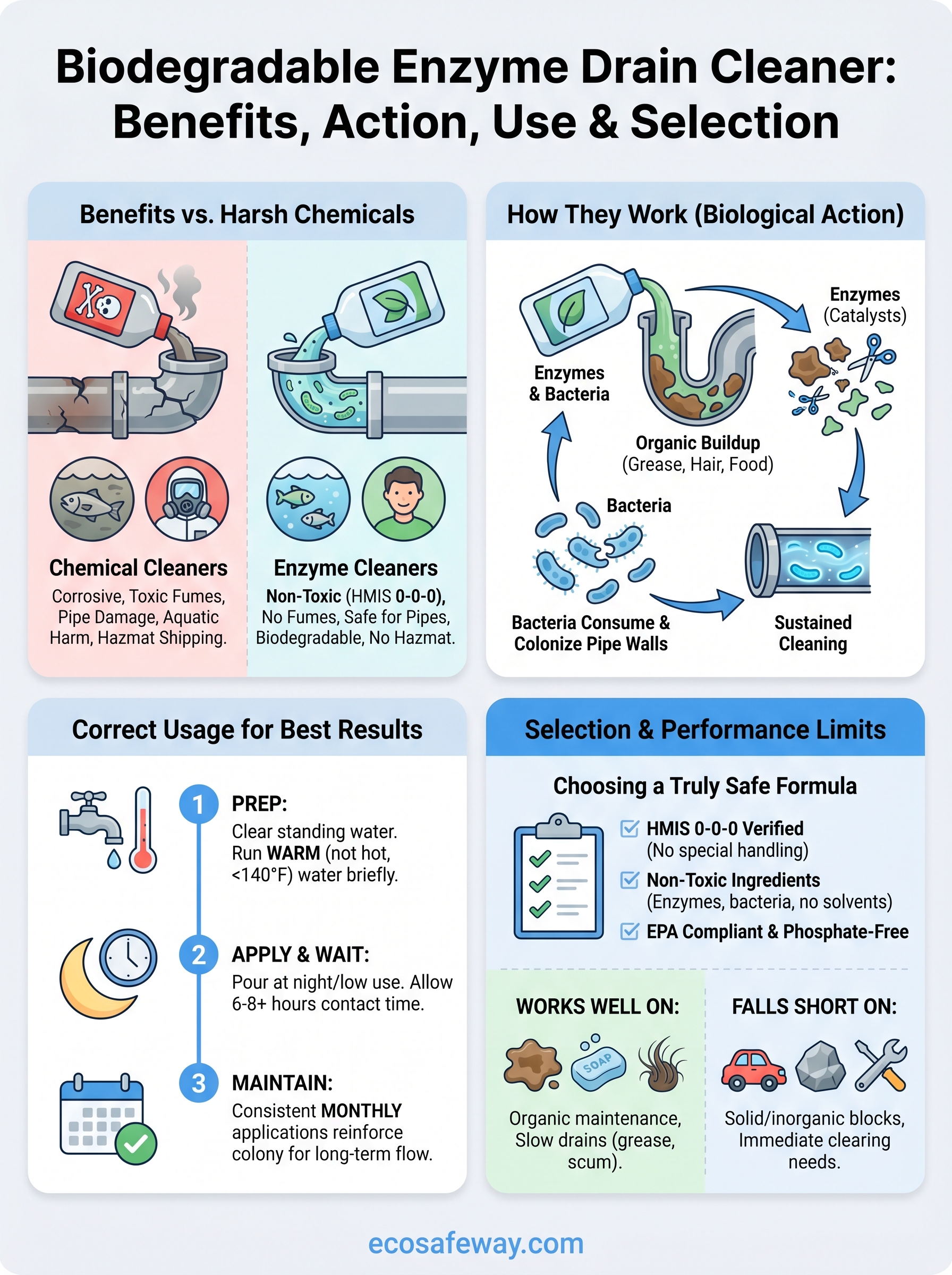
Traditional chemical drain openers like sodium hydroxide (lye) and sulfuric acid work quickly, but they cause real damage along the way. Corrosive formulas don't distinguish between your clog and your plumbing. Over time, repeated use weakens pipe joints and seals, particularly in older homes with metal or PVC pipes. You also face serious handling risks: chemical burns, toxic fumes, and the need for protective gear every time you open the bottle.
The problem with chemical drain openers
The risk doesn't stop at your pipes. When you flush a chemical drain opener, it travels through your drain system and eventually reaches municipal water treatment facilities or natural waterways. Many of these compounds are persistent in the environment, meaning they don't break down easily and accumulate in aquatic ecosystems, affecting fish, plant life, and the broader food chain. Workers at water treatment plants are also exposed to the residual chemical load these products carry downstream.
Caustic drain chemicals are classified as hazardous waste in many jurisdictions, which is why many municipalities restrict how you dispose of leftover or unused product.
On top of the environmental concern, chemical openers often carry strict hazmat shipping classifications, which adds real cost and logistical friction if you order in bulk for a commercial facility or manage multiple properties. Those storage and disposal requirements don't disappear once the job is done either.
What you gain by switching
A biodegradable enzyme drain cleaner solves most of these problems without giving up drain maintenance performance. The enzymes and beneficial bacteria it contains consume organic material at the molecular level, and because they are naturally derived and non-toxic, they break down safely after they leave your drain. There are no fumes to ventilate, no protective gear required, and no hazmat concerns when shipping or storing the product.
For facility managers, property operators, and marine maintenance professionals who service multiple drain lines regularly, the switch also cuts liability exposure directly. You eliminate the need for special storage protocols and complex safety data sheet requirements tied to corrosive classifications. The result is a safer workflow for your team and a cleaner output for the environment.
How enzyme drain cleaners work in drains
Enzymes are biological catalysts that accelerate chemical reactions without being consumed in the process. In a drain cleaner, specific enzymes target the molecular bonds inside organic material, breaking them apart into smaller compounds. Bacteria in the formula then consume those smaller compounds, eliminating the buildup entirely rather than just pushing it further down the line.
The biology behind the cleaning action
Each enzyme type in the formula targets a specific category of material: proteases break down proteins like hair and food residue, lipases attack fats and grease, and amylases handle starch-based buildup. A quality biodegradable enzyme drain cleaner contains multiple enzyme strains so it works across the full range of organic material you find in household and commercial drains. The bacteria in the product colonize the pipe wall, continuing to digest buildup even after the initial application drains away.
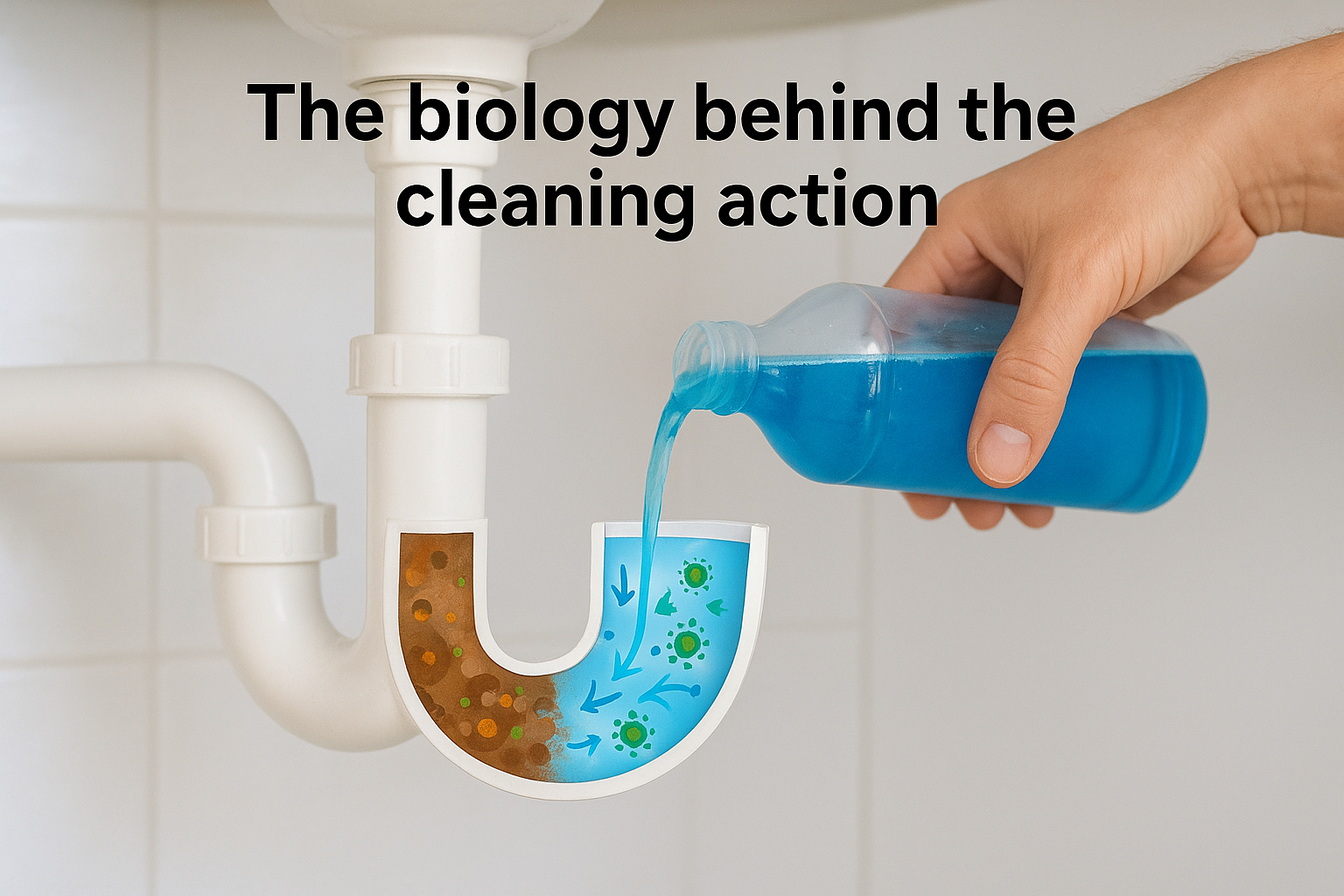
This ongoing colonization is what makes enzyme cleaners more effective at long-term drain maintenance than a single chemical treatment.
What they actually break down
Enzyme cleaners perform best on organic buildup, which covers most of what clogs residential and commercial drains: grease, soap scum, hair, food particles, and paper waste. Your results develop on a biological timeline, meaning improvement happens over hours rather than minutes. The bacteria need moisture and organic material to stay active, so dry or infrequently used drains may need repeat applications to establish a sustained cleaning colony.
How to use an enzyme drain cleaner correctly
Getting the most from a biodegradable enzyme drain cleaner comes down to timing and consistency. Unlike chemical openers that you pour in and flush out immediately, enzyme cleaners need contact time and moisture to let the bacteria colonize and do their work. Pour the product down the drain when the line won't see heavy use for several hours, ideally overnight, so the formula stays in contact with the pipe walls long enough to establish an active colony.
Prep the drain first
Before you apply any enzyme cleaner, clear standing water from the sink or basin. Excess water dilutes the product too much before it reaches the buildup. If you have a slow drain rather than a full blockage, run hot water briefly to loosen surface grease, then let the drain cool slightly before applying the enzyme formula. Hot water above roughly 140°F kills the bacteria in the product, so you want the pipe warm, not scalding.
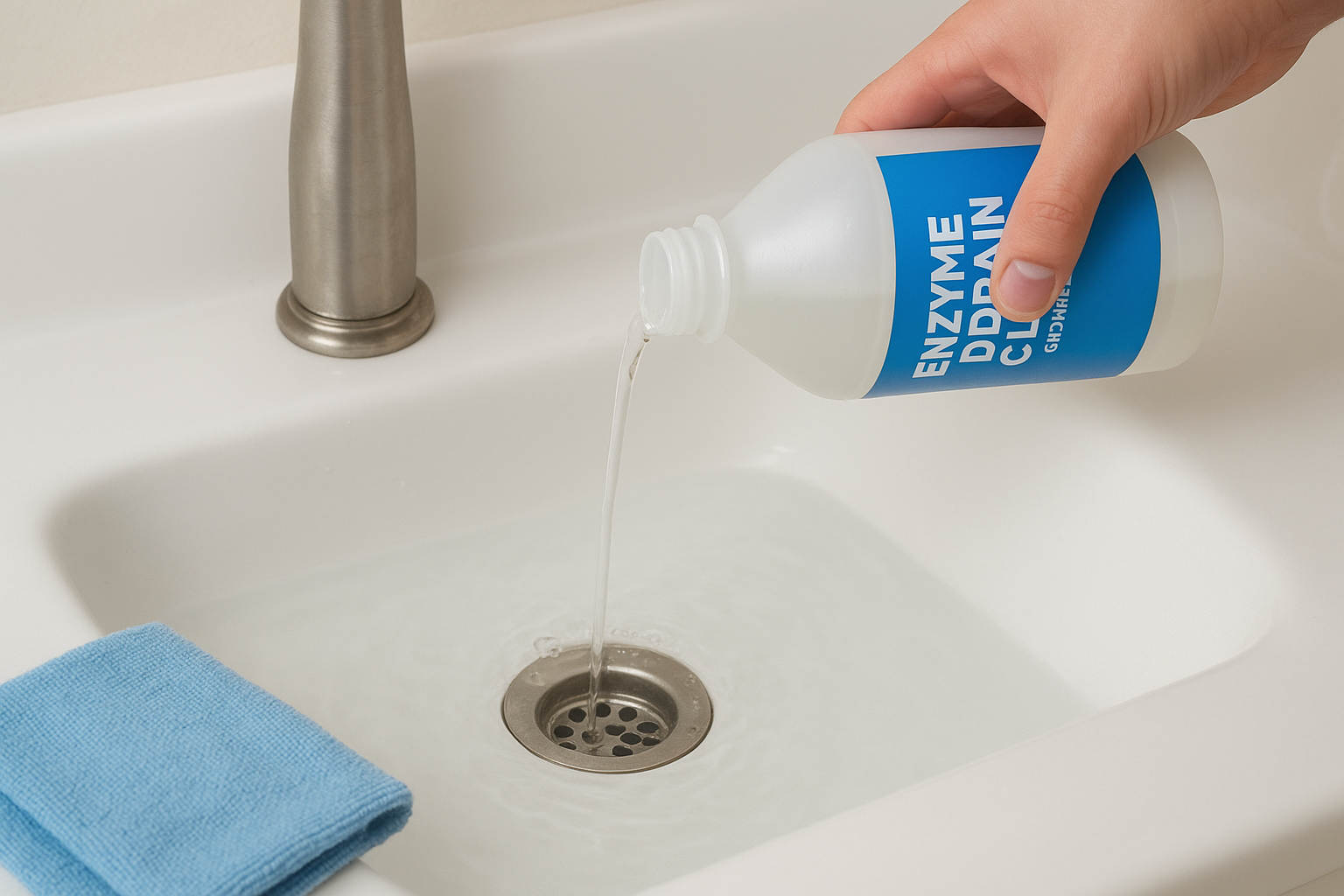
Apply enzyme drain cleaners at night so the product sits undisturbed for six to eight hours, which gives the bacteria enough time to establish and begin digesting buildup.
Maintain the treatment schedule
Consistent monthly applications deliver far better long-term results than a single heavy dose. Each treatment reinforces the bacterial colony on the pipe walls, gradually reducing buildup before it ever becomes a full clog. Mark a recurring reminder so the schedule stays automatic rather than reactive.
Where they work well and where they fail
A biodegradable enzyme drain cleaner is a strong tool for the right job, but it's not the right tool for every job. Knowing which situations it handles well and which ones it can't solve keeps you from wasting time on a problem that needs a different solution.
Where enzyme cleaners perform best
Enzyme drain cleaners excel at ongoing maintenance and slow-moving drains caused by organic buildup. Kitchen sink lines with grease accumulation, bathroom drains clogged with soap scum and hair, and floor drains in commercial kitchens all fall squarely in their effective range. They also work well in high-volume facilities like restaurants, hotels, and apartment buildings where drain maintenance needs to run on a schedule rather than as an emergency response.
Enzyme cleaners are especially valuable in facilities where chemical drain openers would create disposal or liability concerns.
Where they fall short
Solid or inorganic obstructions are outside what enzyme cleaners can handle. A child's toy, a buildup of mineral scale, or a collapsed pipe section won't respond to biological treatment at all. You'll also find them too slow for an active, fully blocked drain where you need the line open within minutes. In those cases, a plumber or mechanical solution like a drain snake handles the immediate problem faster. Once the blockage clears, enzyme maintenance treatments keep the line clear going forward.
How to choose a truly biodegradable formula
Not every product labeled "biodegradable" or "natural" actually delivers on that claim. Marketing language is loosely regulated, so you need to look past the front label and evaluate what's actually inside the bottle before you commit to a product.
Check for verified safety ratings
A HMIS 0-0-0 rating is one of the clearest signals that a formula carries no health, flammability, or physical hazard. This rating means the product requires no special handling, no protective gear, and no hazmat shipping, which matters whether you're ordering for a single bathroom or a commercial facility.
Look for these markers when reviewing any product:
- HMIS 0-0-0 certification
- Non-hazmat shipping classification
- No personal protective equipment required
Look past the label claims
When you evaluate a biodegradable enzyme drain cleaner, check the ingredient disclosure on the product page or safety data sheet. Genuinely non-toxic formulas list enzyme strains and bacterial cultures without including solvents, phosphates, or corrosive compounds alongside them.
If a product claims to be non-toxic but doesn't carry a verifiable safety rating, treat that claim as unconfirmed.
You should also verify that the formula is EPA compliant and phosphate-free. Phosphates feed algae growth in waterways, which depletes oxygen and harms aquatic life. A formula that skips phosphates and passes EPA compliance standards gives you a product that's genuinely safe after it leaves your drain, not just while it's sitting in the cabinet.
Next steps for safer drain care
Switching to a biodegradable enzyme drain cleaner is one of the most straightforward changes you can make to your drain maintenance routine without sacrificing results. The key is treating enzyme cleaners as a monthly maintenance habit rather than an emergency fix. Set a schedule, apply the product overnight, and let the biology do the work. Over time, consistent applications reduce buildup before it ever reaches clog stage, keeping your lines flowing without reactive treatments.
Your choice of formula matters just as much as your application method. A product with a verified HMIS 0-0-0 rating and EPA compliance gives you confidence that what goes down your drain won't create downstream problems for the environment or your facility team. For facility managers and property operators, that also means fewer liability concerns, simpler storage protocols, and no hazmat shipping headaches.
Ready to simplify drain maintenance without hazardous chemicals? Explore Eco Safeway's non-toxic cleaning solutions and find the right formula for your drains and equipment.


