





The best safe disinfectant spray for most homes is an EPA-registered product built on a low-hazard active ingredient: hypochlorous acid, thymol, or hydrogen peroxide. Hypochlorous acid suits families who want no fragrance and little residue. Thymol suits people who prefer plant-derived ingredients. Hydrogen peroxide suits homes that want a product that breaks down into water and oxygen. A fragrance-free mist suits asthma and sensitive noses, and isopropyl alcohol suits small items like phones and remotes.
No disinfectant is risk-free, so "safe" here means lower hazard when you use it as directed. It also helps to know the three jobs. Cleaning removes dirt. Sanitizing lowers bacteria to a safer level, and it is usually a food-contact claim. Disinfecting kills a wider range of germs, including viruses, but only if the surface stays wet for the contact time on the label. That is why parents asking for a safer alternative to conventional sprays need more than a "non-toxic" claim on the front of a bottle.
This list covers five types, with named examples where they exist. Each item explains how it works, who it suits, and what to watch around kids and pets. These sprays are for surfaces, never for skin, people, or animals. Eco Safeway sells non-toxic cleaners to marine, commercial and residential customers, and the same label-first habits apply here.
1. Hypochlorous acid spray
A hypochlorous acid spray is the lowest-residue disinfectant on this list. Its active ingredient is made from salt, water and electricity, with no added fragrance or dyes. Non Toxic Schools names it as its favorite safer disinfectant for exactly that reason.
What it is and what to buy
Force of Nature is the best-known example. Its maker states that the product is EPA-registered and kills 99.9% of viruses, bacteria, mold and mildew without harmful fumes or residue. Check the label on your own bottle for the registration number.
- Active ingredient: hypochlorous acid
- Best for: nurseries, kitchens, and households sensitive to fragrance
- Watch for: solutions lose strength over time, so follow the maker's shelf-life guidance
Safety around kids and pets
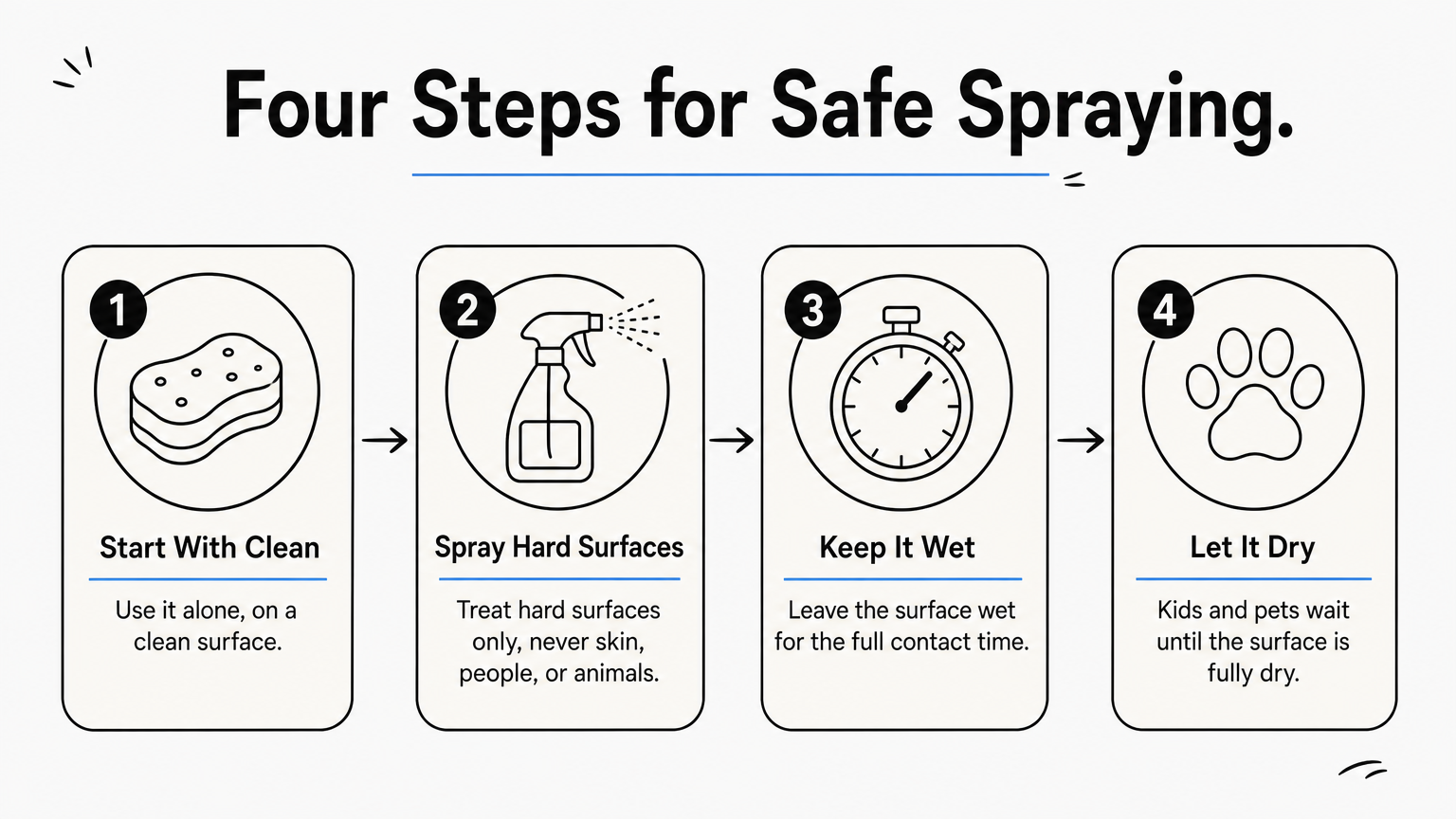
This type suits homes with small children because there is no perfume to inhale and no sticky film to wipe off. Spray hard surfaces, leave them wet for the full contact time, and let them dry before kids or pets touch them.
Never mix it with ammonia or acidic cleaners. Chlorine-based chemistry can release harmful gas when combined with the wrong product. Use it alone, on a clean surface, and store it away from other cleaners.
A low-residue disinfectant is only safe if it is registered and left wet for the full contact time.
2. Thymol-based botanical spray
A thymol-based spray is the best choice if you want a plant-derived disinfectant that you can buy at a regular store. Thymol is a compound found in thyme, and it works as the registered active ingredient.
What it is and what to buy
Seventh Generation sells a disinfecting multi-surface spray built on thymol, and retailers like Walmart carry it. You get a disinfectant that also handles everyday kitchen and bathroom cleaning.
- Active ingredient: thymol
- Best for: counters, sinks, and bathroom surfaces in homes that prefer botanical ingredients
- Watch for: a plant-oil scent that sensitive noses may notice
Safety around kids and pets
Plant-derived does not mean harmless. A thymol spray still needs the full contact time and a rinse on anything a child puts in their mouth, such as a high chair tray. Read the label for food-contact instructions.
Cats deserve extra care. They process essential oils poorly, so keep them off surfaces until fully dry and ask your vet if your cat is sick or elderly. Dogs are less sensitive, but the same rule applies.
Natural origin is not a safety claim, so treat a botanical spray with the same care as any disinfectant.
3. Hydrogen peroxide spray
A hydrogen peroxide spray is the best pick when you want a disinfectant that breaks down into water and oxygen. It works well in bathrooms and other damp areas.
What it is and what to buy
Rescue ready-to-use spray, which uses accelerated hydrogen peroxide, is a common example. Veterinary clinics and cleaning professionals use that chemistry. A plain bottle of drugstore peroxide is not a registered disinfectant product, so choose a spray with an EPA registration number and a stated contact time.
- Active ingredient: hydrogen peroxide
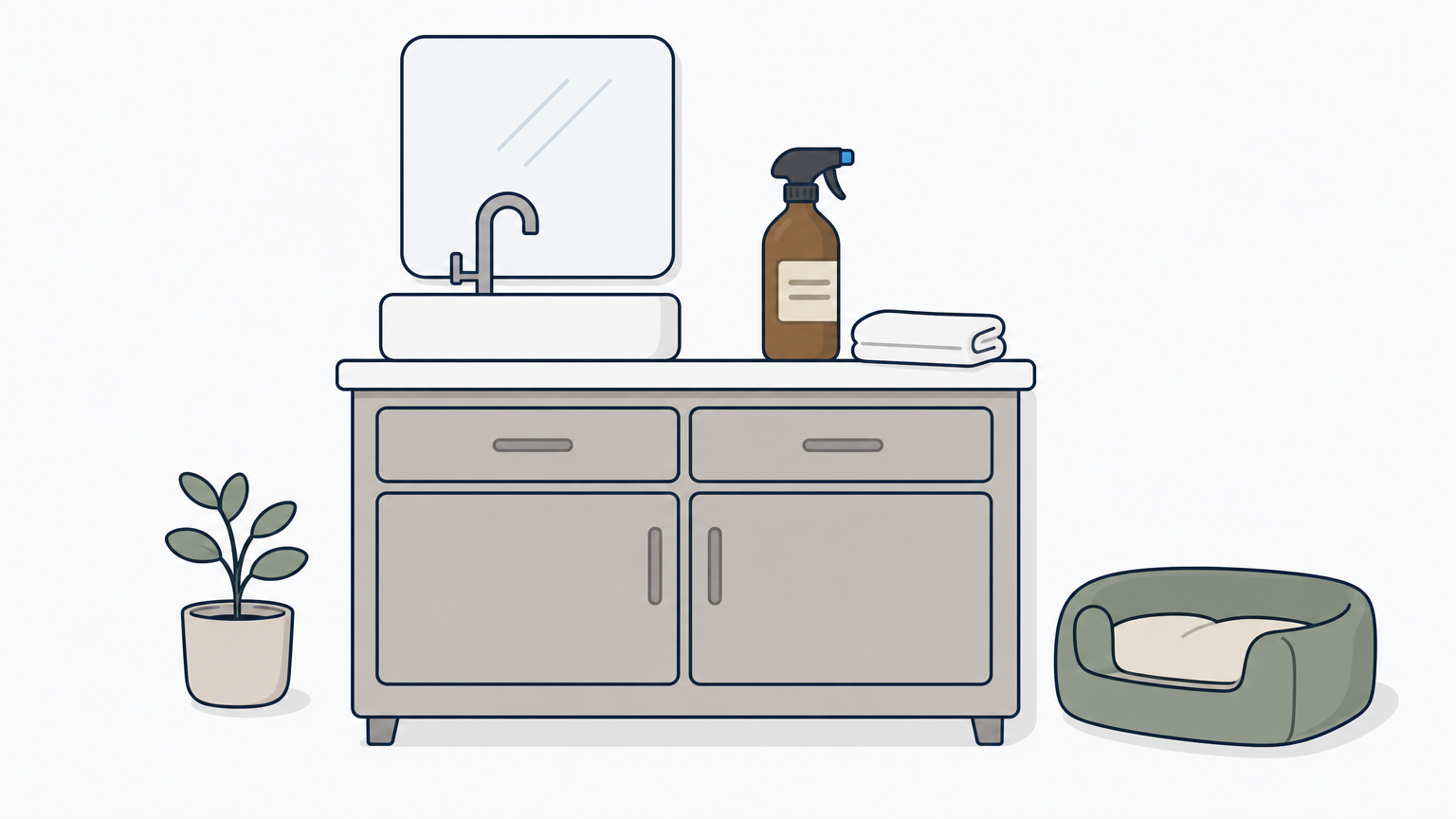
- Best for: bathrooms, floors, and areas around litter boxes and pet beds
- Watch for: it can lighten some fabrics and irritate eyes
Safety around kids and pets
Peroxide leaves no chemical film behind, which makes it a good match for crawling babies and floor-level pets. Wipe it dry or let it air dry, then keep pets out of the room until the surface is dry.
Store it in its original opaque bottle, because light weakens peroxide. Test it on a hidden patch of fabric or colored grout before you spray widely. Wear gloves if you have sensitive skin.
Peroxide leaves little behind, but it needs a fabric test and the original opaque bottle.
4. Fragrance-free ready-to-use mist
A fragrance-free mist is the best safe disinfectant spray for asthma, allergies and sensitive households. Fragrance is a common trigger, so removing it lowers the chance of a reaction.
What it is and what to buy
Clorox Free & Clear Disinfecting Mist appears in EWG's disinfectant ratings. It is described as free of fragrances and dyes, bleach free and color safe. The active ingredient is not obvious from the front of the bottle, so read the label and check the product's EWG rating before you buy.
- Active ingredient: check the label
- Best for: asthma, eczema-prone households, and nurseries
- Watch for: fine droplets that hang in the air
Safety around kids and pets
Fragrance-free does not mean hazard-free. Mist-style sprays put tiny droplets into the air, so spray a cloth or hold the nozzle close to the surface. Never spray toward a face.
Keep children and pets out of the room until the surface dries. For an infant's room, ventilate and wipe off anything a baby might chew. Use it only where you need a disinfecting claim.
The safest scent is no scent, but a fine mist still belongs on the surface, not in the air.
5. 70% isopropyl alcohol spray
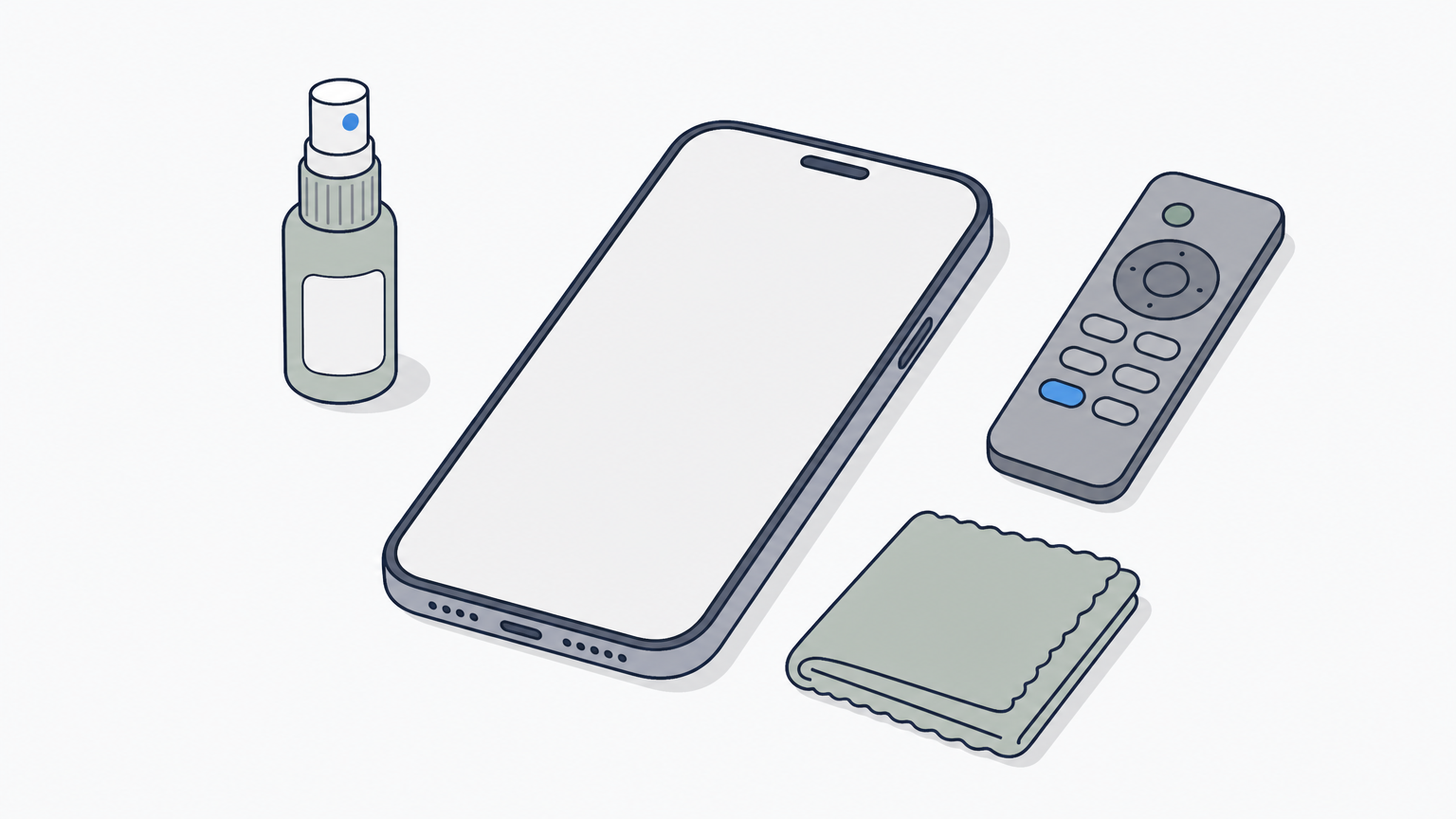
A 70% isopropyl alcohol spray is the right choice for small hard items like phones, remotes, and door handles. It dries fast and leaves no residue, but it is flammable and not for wide use.
What it is and what to buy
Choose a labeled 70% product rather than a stronger one, because the water helps it work. Check your device maker's care guidance first, since alcohol can damage some screens, finishes and plastics.
- Active ingredient: isopropyl alcohol
- Best for: electronics, handles, and small tools
- Watch for: flammability and quick evaporation
Safety around kids and pets
Keep alcohol away from heat, flames and children's reach. It is harmful if swallowed, and the vapors are not good for pets in a closed room. Open a window when you use it.
Skip homemade vinegar and essential-oil sprays for disinfecting. They are not registered products, so they cannot claim to disinfect. Alcohol is the only simple DIY-style option that works, and only on small items.
Alcohol works fast on small items, but it is a spot tool, not a whole-house disinfectant.
Choosing the right spray for your home
Match the active ingredient to your household. Pick hypochlorous acid or a fragrance-free mist for sensitive noses, thymol for a plant-based preference, hydrogen peroxide for damp areas, and alcohol for small items. In every case, look for an EPA registration number, follow the contact time, and keep children and pets off wet surfaces.
Disinfecting works best on a clean surface. For that first step, Eco Safeway offers eco-friendly cleaners such as the all-purpose cleaner and degreaser spray, which you can pair with a registered disinfectant from the list above. Eco Safeway make a wide range of eco-friendly cleaners for various industries and applications.


