





A dirty condenser coil is the most common reason an RV rooftop air conditioner struggles in summer heat. Dust, pollen, road grime, and bug debris pack into the fins, airflow drops, and the compressor works harder for less cooling. Picking the right RV AC coil cleaner matters, because the wrong product can corrode aluminum fins or leave residue that traps more dirt.
Here is the short answer. For most RV owners, a no-rinse foaming coil cleaner is the easiest and safest choice, since it lifts debris and drains out through the unit's normal condensate path. Plain water works for light dust, but it won't cut through greasy film. Whatever you pick, avoid acid-based cleaners on aluminum coils unless the label clearly allows it.
Below, you'll find five coil cleaners worth considering, what each does best, and how to apply them step by step. Eco Safeway makes coil cleaning products for HVAC systems, so we focus on what the label says, how to apply it safely, and when to stop and call a technician.
1. Foaming no-rinse coil cleaners
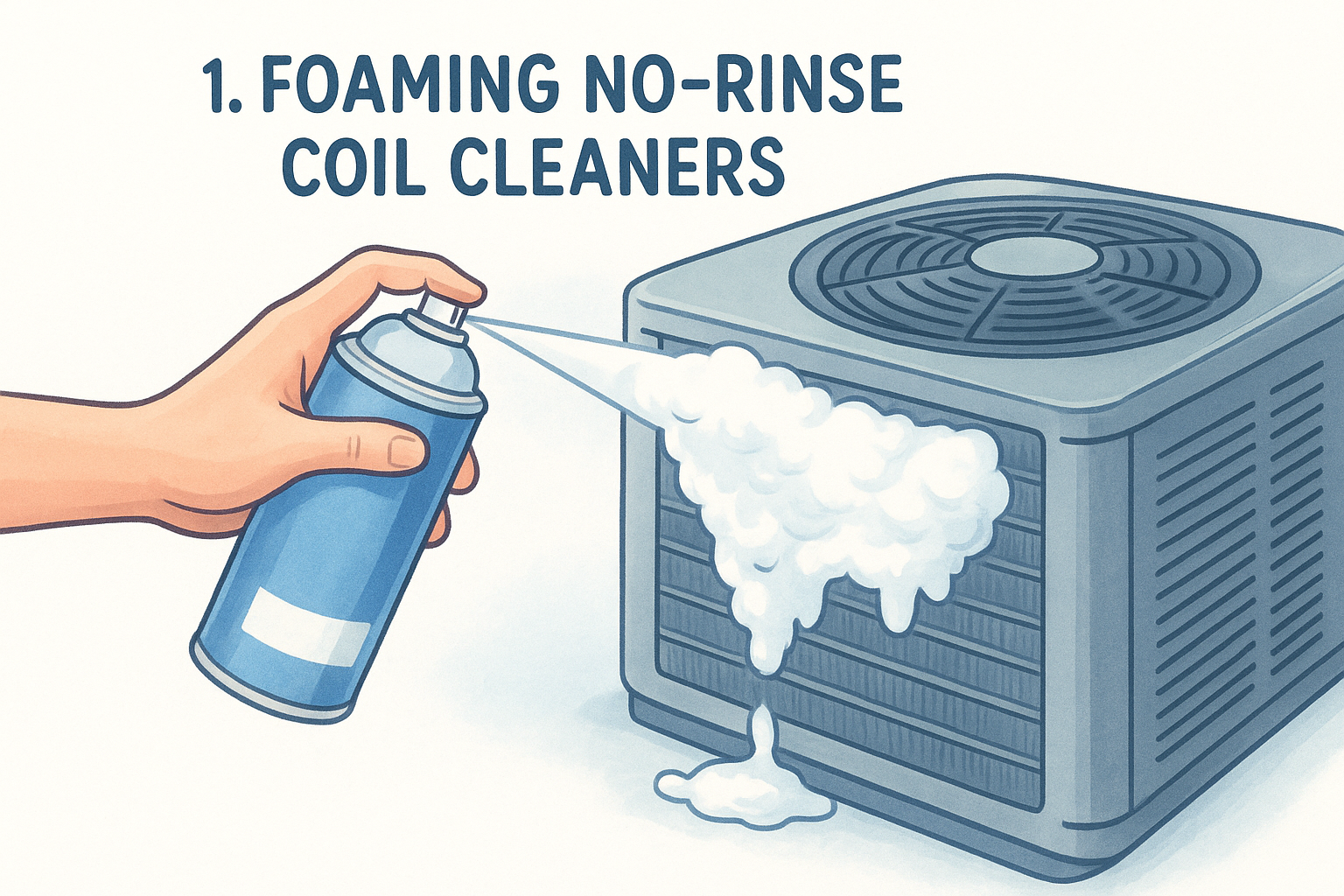
Foaming cleaners are the default pick for most rooftop units, and they earn it. A good RV AC coil cleaner in this category is made to be sprayed on and left to work, so you don't need a hose, a ladder full of buckets, or a wet roof.
How it works
The product leaves the can as a thick foam that clings to the fins and pushes into the gaps between them. As it breaks down, it loosens dust and light grease and turns back into liquid. That liquid drains out through the condensate path, carrying the grime with it.
Best for
This option suits owners who want a quick seasonal cleanup without rinsing. It works well on condenser coils that are dirty but not caked, and it's handy at campsites where water access is limited.
Pros and limits
Speed and low mess are the main wins. The foam reaches areas a brush can't, and there is no runoff to manage. The limits are real, though. Foam won't dissolve packed mud or matted leaves, and not every formula is safe for every coil, so confirm the label allows aluminum fins and any coated coils.
Choose a foaming cleaner only if its label says it is safe for your coil material.
How to apply it
Follow these steps, and always defer to the product label if it differs.
- Shut off power at the breaker and the thermostat.
- Remove the shroud and brush off loose debris with a soft brush.
- Spray the foam evenly across the coil, working from the inside out if you can reach.
- Wait for the time listed on the label.
- Run the unit so condensate can flush the residue, then check that the drain is clear.
- Repeat on stubborn spots, never by scrubbing hard against the fins.
2. Aluminum-safe spray coil cleaners from hardware stores
Hardware and RV supply stores stock aluminum-safe spray coil cleaners in the HVAC aisle, usually in a trigger bottle or pump sprayer. They cost less than specialty products and are easy to grab mid-trip.
How it works
These liquids are non-acid formulas that break down grease and grime on contact. Many labels then call for a light rinse so the residue leaves the fins.
Formulas differ a lot, so check the label for aluminum compatibility before you buy.
Best for
Choose this option when the coil has an oily film from road grime or cooking exhaust that dry brushing won't touch.
It also suits owners who already carry a hose or spray bottle for rinsing.
Pros and limits
The big win is low cost and easy availability. The trade-off is less certainty about what's in the bottle.
- Some products are meant for steel or copper coils and can damage aluminum.
- Rinsing adds water, so the roof and the unit's drain need to handle it.
If the label doesn't name aluminum fins as safe, leave the bottle on the shelf.
How to apply it
- Turn off power at the breaker and thermostat.
- Brush off loose debris.
- Spray lightly, then wait the labeled dwell time.
- Rinse gently at low pressure, only if the label says so.
3. Evaporator-specific self-rinsing cleaners
The evaporator coil sits on the cool, indoor side of the unit, so it needs a different RV AC coil cleaner than the rooftop condenser does. Dust and moisture there breed musty smells.
How it works
These cleaners are sprayed onto the coil and then rinsed by the condensate the coil makes when the AC runs. You don't need a hose. Check the label for aluminum and coated-fin compatibility before you buy.
Best for
Pick this option when airflow is weak, the vents smell musty, or the coil looks fuzzy once you pull the interior cover. It suits owners who are comfortable removing the ceiling assembly.
Pros and limits
Self-rinsing means no water poured inside the cabin. Access is the limit, though. Many RV evaporators sit tight against the ceiling pan, and overspray can reach the control board and ceiling panels.
Use an evaporator cleaner only where condensate can carry it out of the unit.
How to apply it
- Shut off power at the breaker.
- Remove the interior cover as your owner's manual describes.
- Cover the control board and wiring with plastic.
- Spray the coil face as the label directs.
- Wait the listed dwell time, then run the AC so condensate flushes the residue.
- Check the drain path and ceiling for drips.
4. Compressed air and a fin comb
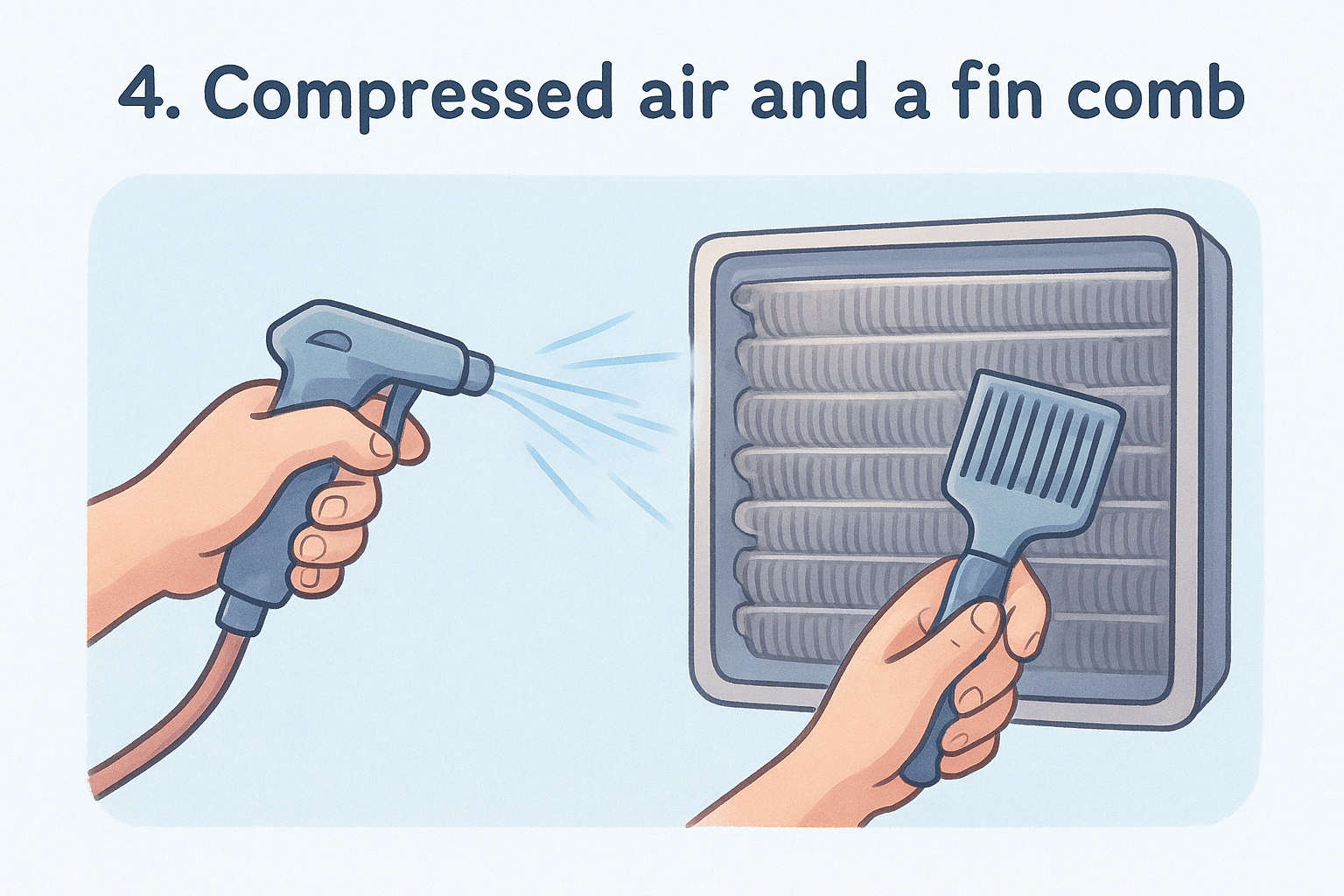
Dry cleaning is the safest first step before you buy any chemical. It removes loose dust and debris with no residue or corrosion risk, so it pairs well with any RV AC coil cleaner you use later.
How it works
Air blows debris back out the way it came in, which clears the blocked gaps between fins.
Each tool fixes a different problem. A fin comb straightens bent fins so air can pass again, which matters after hail damage or a stray brush stroke.
Best for
Owners with dry, dusty coils or light pollen buildup get the most from this method. It also suits anyone who wants to avoid chemicals entirely or maintain a coil between deeper cleanings.
Pros and limits
Cost is low, and nothing here can attack the metal. Dry air won't cut grease, though, and too much pressure can bend fins or drive grit deeper into the coil.
Dry cleaning removes dust, not grease, so match the method to the dirt.
How to apply it
Wear eye protection, because debris flies, and use low air pressure from a small compressor or a can of compressed air.
- Shut off power at the breaker.
- Remove the shroud and brush off loose debris.
- Blow air from the clean side outward, keeping the nozzle a few inches back.
- Run the comb gently through bent fins, matching the comb's fins-per-inch to your coil.
- Vacuum the loosened debris, then refit the shroud.
5. Mild detergent and low-pressure water rinse
The old-school method still works. A few drops of dish soap in water is a budget stand-in for a store-bought RV AC coil cleaner, and you probably own everything you need already.
How it works
Mild detergent loosens oily film and dirt so water can carry it off the fins. The rinse does the real work, so low pressure matters more than the soap.
Best for
This suits owners with a lightly greasy condenser coil who want a cheap, non-acid option. It also makes sense when you've run out of cleaner and the coil needs attention now.
Pros and limits
Cost is near zero, and plain soap is gentle on aluminum. The risks are force and water. High pressure flattens fins in seconds, and water near electrical parts is a hazard. Heavy grease may still need a dedicated product.
Gentle water and patience clean a coil; pressure only bends it.
How to apply it
- Shut off power at the breaker and thermostat.
- Remove the shroud and brush off loose debris.
- Mix a few drops of mild dish soap in a spray bottle of water.
- Mist the coil and wait a few minutes.
- Rinse from the clean side outward with a soft garden hose stream, never a pressure washer.
- Let the unit dry fully before restoring power.
Choosing the right cleaner for your RV
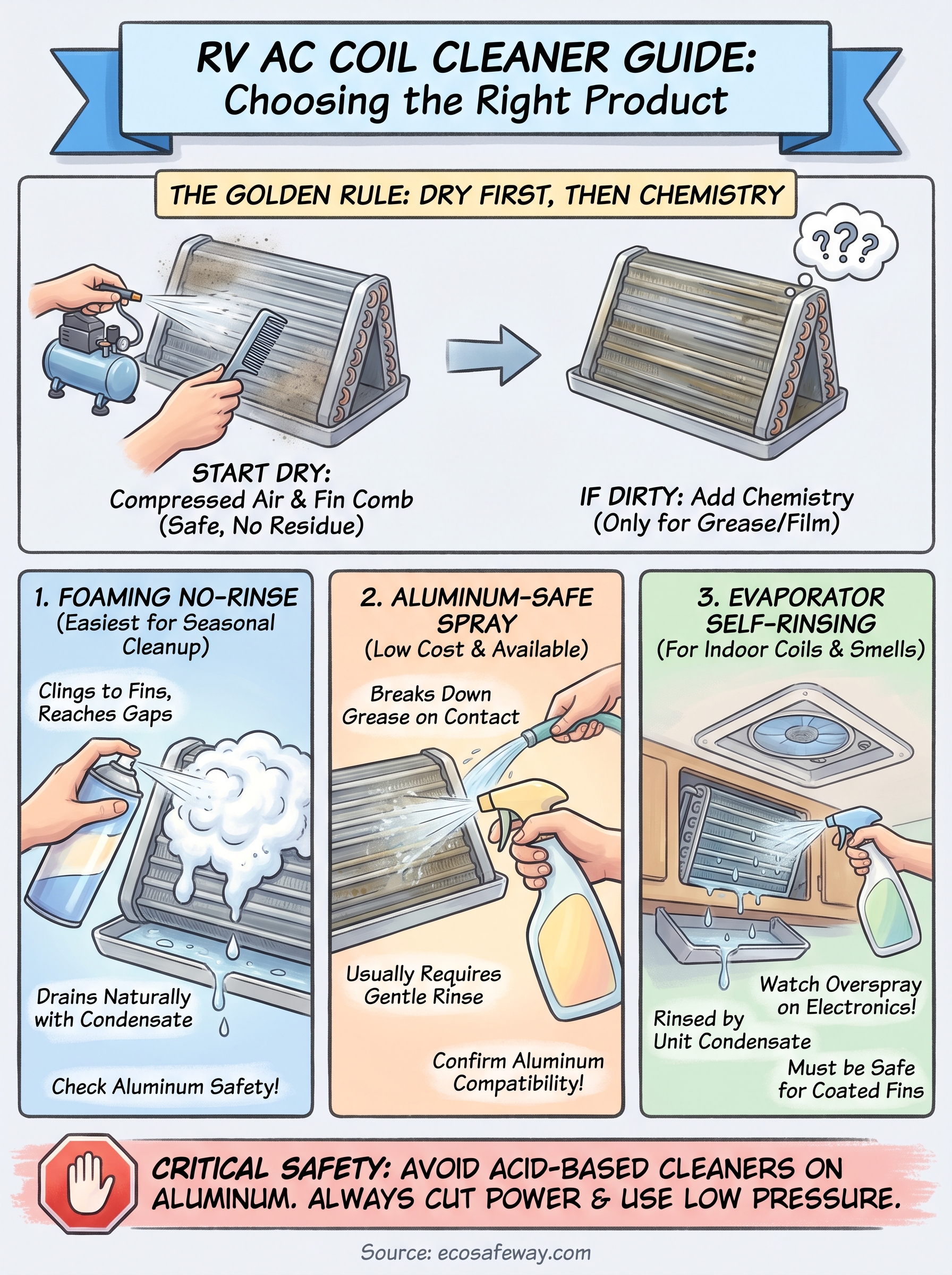
Start dry, then add chemistry only when the dirt demands it. Compressed air and a fin comb handle dust and bent fins. A foaming no-rinse cleaner is the easiest RV AC coil cleaner for most rooftop units, and a mild detergent rinse covers light grease on a budget.
Whatever you choose, confirm the label allows aluminum fins, cut power first, and keep water pressure low. If the coil is packed solid or the fins are badly flattened, call an RV technician instead of pushing harder.
Facility managers who maintain larger systems can look at Eco Safeway's commercial condenser coil cleaner for commercial HVAC equipment. Read the product page to confirm what it is designed for before you buy.


